

Author: VitaWeller Health & Wellness Editorial Team
Evidence Reviewed: Peer-reviewed studies, systematic reviews, and guidance from recognized health organizations (NIH, NCCIH, ADA, Mayo Clinic).
Editorial Standards: Evidence-based • Independently researched • Fact-checked before publication
Introduction
Weight loss is one of the most searched health topics in the United States, and one of the most confusing. Diets, exercise plans, apps, supplements, and prescription medications all make claims about results. Within that noise, GLP-1 medications have changed the conversation. Several of them have produced average weight loss in clinical trials that was larger than most earlier prescription options achieved.
That progress comes with complications. Some of these medications are FDA-approved and prescribed for specific adults. Others are sold as compounded versions that are not approved by the FDA. Online services now connect patients with prescribers, which can be helpful but also needs careful reading. This guide explains how medical weight loss works, what the trial evidence shows, where the risks lie, and what to check before making any decision.
Nothing here should be read as a promise that a specific medication will work for you, or that it is suitable for everyone.
Evidence Review
Evidence Level: ★★★★☆ Strong for average weight loss during treatment, with important limits
- 📊 Large randomized, placebo-controlled trials provide strong evidence that semaglutide and tirzepatide can produce substantial average weight loss in selected adults with overweight or obesity.
- 📈 The reported results reflect medication used with lifestyle support and measured during the treatment period. They are not a guarantee of an individual result or proof of permanent weight maintenance.
- 🔬 The trials used specific doses, eligibility criteria, and follow-up plans. Their findings cannot automatically be applied to people with different medical histories or to compounded products.
- ⚠️ Evidence for average weight loss is stronger than evidence for every long-term health outcome. The benefits must be weighed against gastrointestinal side effects, contraindications, and less common serious risks.
The clearest conclusion is that approved GLP-1 and GIP/GLP-1 medications have strong trial evidence for average weight loss during treatment, while individual response, long-term maintenance, and broader health outcomes still require careful clinical interpretation.
Quick Answer
Medical weight loss is treatment for obesity or overweight that is guided by a licensed clinician. It can include prescription medications, and in some cases procedures, alongside diet and physical activity changes. GLP-1 medications such as semaglutide, and dual GIP/GLP-1 medications such as tirzepatide, are FDA-approved options for chronic weight management in specific adults. Their trials showed substantial average weight loss, but also meaningful gastrointestinal side effects and rare serious risks that require medical screening.
Compounded versions of these drugs are not FDA-approved. They should not be treated as equivalent to approved products.
In This Article
- What Is Medical Weight Loss?
- What Are GLP-1 Medications?
- GLP-1 vs. GIP/GLP-1
- How Do These Medications Work?
- Potential Benefits
- Who May Be Eligible?
- Treatments for Women and Men
- Side Effects and Potential Risks
- Who Should Avoid or Use Caution?
- Approved vs. Compounded Versions
- What Happens After Stopping?
- Lifestyle Habits That Support Results
- Evaluating an Online Weight-Loss Program
- Frequently Asked Questions
- Final Thoughts
What Is Medical Weight Loss?
Medical weight loss refers to a structured approach to excess body weight that is overseen by a healthcare professional. It usually starts with a clinical assessment that looks at body weight, body mass index (BMI), waist circumference, blood pressure, blood sugar, and other health conditions. The clinician then discusses options that may include nutrition counseling, a physical activity plan, behavioral support, prescription medication, or, for some adults, surgery.
Obesity is common. According to the Centers for Disease Control and Prevention (CDC), the prevalence of obesity among U.S. adults aged 20 and older was 41.9% during 2017 to March 2020. CDC defines obesity as a BMI of 30.0 or higher, and notes that many adults with obesity also have other chronic conditions, including high blood pressure and diabetes.
BMI is a screening tool, not a complete measure of health. Two people with the same BMI can have very different body composition and risk profiles, which is one reason clinicians evaluate the whole picture.
What Are GLP-1 Medications?
GLP-1 stands for glucagon-like peptide-1, a hormone the gut releases after eating. GLP-1 receptor agonists are medications that mimic this hormone’s action. They are given by a once-weekly or daily injection, depending on the product.
Semaglutide is a GLP-1 receptor agonist. The FDA-approved product Wegovy contains semaglutide and is approved for chronic weight management in adults with obesity, or with overweight plus at least one weight-related condition. Ozempic, also containing semaglutide, is approved for type 2 diabetes. The same active ingredient can be approved for different uses at different doses, so the product name and labeled use matter.
You can review the approval record for Wegovy in the FDA Drugs@FDA database (NDA 215256). Always confirm the current indication in the official prescribing information, because labels can change.
GLP-1 vs. GIP/GLP-1: Understanding the Difference
Tirzepatide is a different kind of molecule. It is a once-weekly injection that activates two receptors, the GLP-1 receptor and the glucose-dependent insulinotropic polypeptide (GIP) receptor. GIP is another nutrient-stimulated gut hormone involved in energy balance. Tirzepatide is described in the phase 3 obesity trial as a dual GIP and GLP-1 receptor agonist.
The FDA-approved product Zepbound contains tirzepatide and is approved for chronic weight management in adults with obesity, or with overweight plus a weight-related condition. Mounjaro, also containing tirzepatide, is approved for type 2 diabetes. Like semaglutide, the indications differ by product. You can view Zepbound’s approval record in the FDA Drugs@FDA database (NDA 217806).
In short, semaglutide is a GLP-1 receptor agonist, while tirzepatide is a dual GIP/GLP-1 receptor agonist. The two are not interchangeable, and trial results for one cannot be assumed for the other.
How Do These Medications Work?
Weight loss with these medications is thought to come mainly from reduced energy intake. The phase 3 semaglutide trial authors describe the effect as a reduction in appetite that is thought to result from direct and indirect effects on the brain. They also note that the medication slows the rate at which the stomach empties, which can increase fullness after meals. The exact mechanisms are still being studied, and researchers do not fully agree on their relative importance.
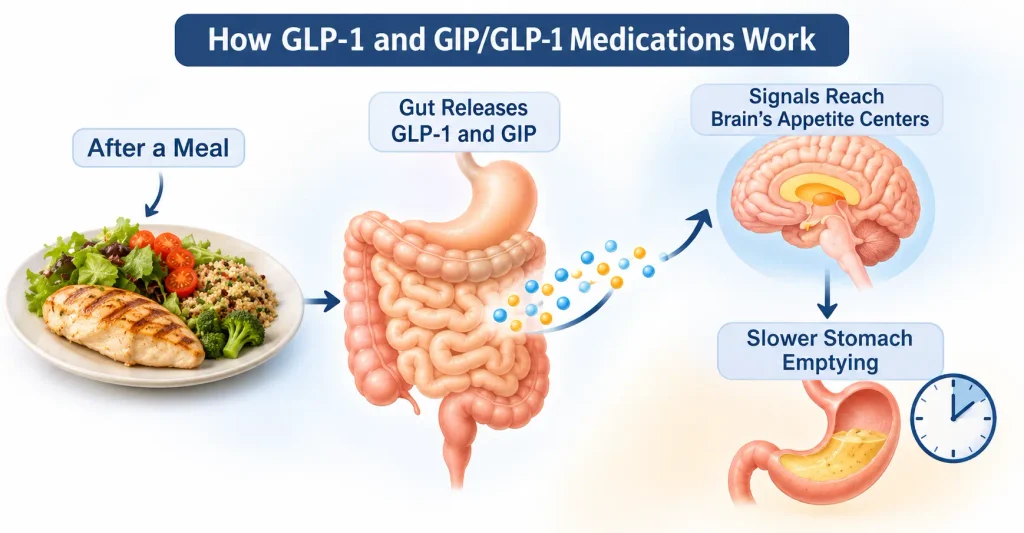
These medications are not a substitute for a diet and activity plan. Both phase 3 trials discussed below gave all participants lifestyle counseling along with the study drug or placebo, so the results reflect the medication added to lifestyle support.
Potential Benefits of GLP-1 Treatments
Evidence Level: Strong for average weight loss in trials; long-term outcomes still under study
Two large, randomized, placebo-controlled trials provide the main evidence for weight loss with these medications in adults without diabetes. Both were industry-sponsored, and both enrolled adults with obesity or with overweight and a weight-related condition.
| Trial | Medication and Duration | Mean Weight Change | Adults Losing 5% or More |
|---|---|---|---|
| STEP 1 (NEJM, 2021) | Semaglutide 2.4 mg weekly, 68 weeks, with lifestyle intervention; 1,961 adults | -14.9% vs. -2.4% with placebo | 86.4% vs. 31.5% |
| SURMOUNT-1 (NEJM, 2022) | Tirzepatide 5, 10, or 15 mg weekly, 72 weeks, with lifestyle intervention; 2,539 adults | -15.0% (5 mg), -19.5% (10 mg), -20.9% (15 mg) vs. -3.1% with placebo | 85%, 89%, and 91% vs. 35% |
- In both trials, the share of participants losing at least 5% of body weight was far higher on active treatment than on placebo.
- Weight loss was larger at higher tirzepatide doses in SURMOUNT-1, although side effects also increased with dose in that trial.
These figures are trial averages. They describe what happened to groups of carefully selected participants who received structured support, and they do not predict the result for any individual. Also note that the trials excluded people with type 2 diabetes, and that most SURMOUNT-1 participants were women.
Health benefits beyond the scale, such as effects on blood pressure, blood sugar, or heart and kidney outcomes, should be discussed with a clinician. They depend on the individual, the product, and on additional study data that this article does not summarize in detail.
Who May Be Eligible for Medical Weight-Loss Treatment?
Eligibility is set by the medication’s prescribing information and by the clinician, not by a marketing page. In the phase 3 trials, adults with a BMI of 30 or greater were eligible, as were adults with a BMI of 27 or greater who had at least one weight-related condition. Adults with diabetes were excluded from both trials.
Eligibility for prescription treatment is a clinical decision that depends on more than BMI. Clinicians consider the medication’s labeled use, prior weight-loss attempts, other medications, and personal and family medical history. Eligibility also varies by insurance coverage and by the rules of any service that dispenses the medication.
GLP-1 Treatments for Women and Men
Many people ask whether these medications work differently for women and men. The honest answer is that the current trial evidence does not provide a reliable basis for sex-specific recommendations. In SURMOUNT-1, about 67.5% of participants were women. Smaller subgroup results should not be treated as proof that the medication works differently for men or women.
Sex and reproductive status matter for safety planning. Prescribing information for these medications includes guidance on pregnancy, planned pregnancy, and contraception, and clinicians discuss those points before prescribing. Anyone who could become pregnant, or who uses hormonal birth control, should review that guidance with their prescriber before starting treatment.
Common Side Effects and Potential Risks
Gastrointestinal effects are the most common side effects of these medications. In STEP 1, gastrointestinal events were reported by 74.2% of participants on semaglutide, compared with 47.9% on placebo. They were typically nausea, diarrhea, vomiting, or constipation, mostly mild to moderate, and most often during dose increases. In that trial, 7.0% of semaglutide participants stopped treatment because of adverse events, compared with 3.1% on placebo. SURMOUNT-1 reported similar gastrointestinal patterns for tirzepatide, with 4.3% to 7.1% stopping because of adverse events, compared with 2.6% on placebo.
Other risks listed in the trials and labels deserve attention:
- Gallbladder problems. Gallbladder-related disorders, mostly gallstones, were more common with semaglutide in STEP 1 (2.6% vs. 1.2%). Rapid weight loss can contribute to gallbladder disease.
- Pancreatitis. Mild acute pancreatitis was reported in STEP 1 participants on semaglutide. Severe pancreatitis is a serious medical emergency, and the prescribing information advises stopping the medication and seeking care if it occurs.
- Thyroid tumor warning. The FDA-approved labels for these medications carry a boxed warning about thyroid C-cell tumors in rodent studies. They are not recommended for people with a personal or family history of medullary thyroid carcinoma or Multiple Endocrine Neoplasia syndrome type 2 (MEN 2).
- Dehydration and kidney strain. Persistent vomiting or diarrhea can cause dehydration, which may affect kidney function.
Anyone who experiences severe abdominal pain, persistent vomiting, signs of an allergic reaction, or other concerning symptoms should contact a clinician or seek urgent care right away. Read the medication guide that comes with the prescription.
Who Should Avoid or Use These Medications With Caution?
These medications are not suitable for everyone. Clinicians typically review the following before prescribing, and the prescribing information lists formal contraindications and warnings:
- People with a personal or family history of medullary thyroid carcinoma or MEN 2.
- People with a history of pancreatitis, or with significant gallbladder disease.
- People with diabetic retinopathy or a history of diabetes-related eye complications, which clinicians monitor closely.
- People who are pregnant, planning pregnancy, or breastfeeding, who need individual guidance.
- People taking other diabetes or weight-loss medications, which can change the risk of low blood sugar or other interactions.
- People with eating disorders or a history of disordered eating, where weight-focused treatment may not be appropriate.
Anyone under 18 is outside the adult populations studied in these trials, and treatment decisions for minors involve different considerations.
Approved Medications vs. Compounded Versions
This distinction is important. FDA-approved products such as Wegovy and Zepbound have been reviewed by the FDA for safety, effectiveness, and manufacturing quality. Their labels describe approved uses, dosing, warnings, and side effects.
Compounded medications are prepared by pharmacies under federal and state rules. They are not FDA-approved. The FDA does not review them for safety, effectiveness, or quality before they are sold, and they should not be presented as equivalent to approved products. The FDA notes that compounding may be appropriate when a patient’s medical need cannot be met by an FDA-approved drug, but unnecessary use may expose patients to avoidable risks such as contamination or too much or too little active ingredient.
In its current guidance on unapproved GLP-1 drugs, the FDA identifies semaglutide and tirzepatide among the drugs being offered in unapproved versions. The agency describes concerns including dosing errors, inadequate refrigeration during shipping, fraudulent labels, and adverse-event reports. It recommends using a prescription from a doctor and a state-licensed pharmacy, and says compounded drugs should only be used when a patient’s medical needs cannot be met by an FDA-approved drug. Read the FDA’s current guidance on unapproved GLP-1 drugs.
Shortage status also matters. FDA’s Drug Shortage Database currently lists both semaglutide and tirzepatide as Resolved. You can check the current status in the FDA Drug Shortage Database. Ask any prescriber or pharmacy what product they are dispensing, who made it, and whether it is FDA-approved.
What Happens After Stopping GLP-1 Treatment?
Stopping these medications is a medical decision that should be planned with a clinician. Weight regain after stopping is a recognized issue with obesity medications, because the appetite and metabolic changes that helped with weight loss often return when treatment ends. Both phase 3 trials were designed around treatment periods, and their results describe weight during treatment, not long-term maintenance after stopping.
A clinician may recommend a gradual approach, closer monitoring, or a plan for maintaining weight with nutrition, physical activity, and follow-up care. Stopping without a plan can leave people without the support they need.
Lifestyle Habits That Support Long-Term Weight Management
Lifestyle changes are the foundation of every medical weight-loss plan, and they matter even for people who take medication. Both trials added a reduced-calorie diet and regular physical activity to the study treatment. The SURMOUNT-1 trial, for example, included lifestyle counseling aimed at a 500-calorie daily deficit and at least 150 minutes of physical activity per week.
- Build meals around vegetables, lean protein, and whole grains, and limit ultra-processed foods.
- Eat slowly and stop when comfortable, since GLP-1 medications can make large meals uncomfortable.
- Keep up with fluid intake, especially if you experience nausea or diarrhea.
- Aim for regular physical activity, including walking and strength training.
- Track progress with measurements that matter, such as waist size, blood pressure, and lab results, not just scale weight.
Evaluating an Online Medical Weight-Loss Program
Online services have made it easier to request a medical weight-loss consultation. Some of them connect patients with independent clinicians, and some dispense compounded medications. Evaluating any service carefully is worth the time.
As one example, HealSend describes itself as an online medical weight-management service for U.S. adults. Based on its current terms, HealSend states that it provides administrative and technology services, while licensed, independent healthcare professionals make the medical decisions about whether a prescription is appropriate. Its terms also state that:
- Eligibility is limited to adults 18 and older who are U.S. residents.
- Services are paid for in cash and are not billed to insurance.
- Membership is billed on a recurring basis and renews automatically unless cancelled in advance.
- Medications offered may be compounded products from pharmacies, which are not FDA-approved.
- Any warranty or money-back terms are conditional, and the terms set out specific exclusions.
Questions to Ask Before You Sign Up
- Is the medication FDA-approved, or is it compounded? Who made it?
- Is the prescribing clinician licensed in my state, and will they review my history before prescribing?
- What is the total cost per month, and is the membership recurring?
- How do I cancel, and what refund or warranty terms apply?
- What follow-up care is included, and how are side effects handled?

Frequently Asked Questions
Yes, some are. Wegovy (semaglutide) and Zepbound (tirzepatide) are FDA-approved for chronic weight management in specific adults. Other products containing the same active ingredients are approved for different uses, such as type 2 diabetes.
No. Compounded medications are not FDA-approved and should not be treated as equivalent to approved products. Ask who made the product and whether it is FDA-approved.
In the phase 3 trials, average weight loss at the end of treatment was about 15% with semaglutide 2.4 mg and about 15% to 21% with tirzepatide, depending on dose. These were averages in controlled trials with lifestyle support, and individual results vary.
Gastrointestinal effects, particularly nausea and diarrhea, are the most common. They are usually mild to moderate and tend to occur during dose increases, but they can still be significant for some people.
Yes, the FDA-approved products are prescription medications. Any legitimate program should involve a licensed clinician making an individual decision.
No. Eligibility depends on health history, medications, pregnancy status, and personal goals. A clinician should evaluate whether treatment is appropriate.
Final Thoughts
GLP-1 and GIP/GLP-1 medications have given many adults with obesity a new option, and the trial results are substantial. They are also medications with real side effects, specific contraindications, and long-term questions still being studied. The main decision points are whether an FDA-approved product is appropriate for you, what your medical history says about risk, and how you will maintain progress over time.
If you are considering medical weight loss, start with a conversation with a licensed clinician who can review your full health picture. Ask questions, read the prescribing information, and be cautious about any offer that promises fast or guaranteed results.
📚 Related Articles
Explore more evidence-based guides, supplement reviews, and practical wellness articles to better understand ingredients, benefits, limitations, and how different products compare.
- ➡️ HealSend Review: GLP-1 Treatments, Costs, Benefits & Potential Risks
- ➡️ Semaglutide vs Tirzepatide: Weight Loss, Risks & Cost
- ➡️ Compounded Semaglutide vs. FDA-Approved Semaglutide: Key Differences, Safety & What to Know
- ➡️ How Much Do GLP-1 Treatments Cost?
- ➡️ Healthy Weight Benefits: Physical & Mental Health Impact
- ➡️ NR vs NMN vs NAD+: Key Differences, Benefits, and What Research Shows
- ➡️ What Is NAD+? Benefits, Functions & What the Science Says
- ➡️ Genuine Purity Longevity+ Review
- ➡️ Genuine Purity NMN Trial Review
- ➡️ Healthy Aging Supplements Explained
- ➡️ What Is Berberine? Benefits, Uses, Side Effects & How It Works
- ➡️ Berberine Benefits for Blood Sugar and Metabolic Health
- ➡️ Hydration Benefits: Health Tips for Daily Water Intake
- ➡️ How to Support Healthy Blood Sugar Levels Naturally
- ➡️ The Importance of Quality Sleep for a Healthier Life
- ➡️ The Benefits of Magnesium for Sleep and Stress
- ➡️ Revive Daily Review
- ➡️ Java Burn Review: Ingredients, Benefits, Pros & Cons
Scientific References and Trusted Resources
- Wilding JPH, Batterham RL, Calanna S, et al. Once-Weekly Semaglutide in Adults with Overweight or Obesity (STEP 1). N Engl J Med. 2021;384:989-1002. https://doi.org/10.1056/NEJMoa2032183
- Jastreboff AM, Aronne LJ, Ahmad NN, et al. Tirzepatide Once Weekly for the Treatment of Obesity (SURMOUNT-1). N Engl J Med. 2022;387:205-216. https://doi.org/10.1056/NEJMoa2206038
- Centers for Disease Control and Prevention. Adult Obesity Facts. https://www.cdc.gov/obesity/adult-obesity-facts/index.html
- U.S. Food and Drug Administration. Drugs@FDA: Wegovy (NDA 215256), approval record and labeling. Drugs@FDA NDA 215256
- U.S. Food and Drug Administration. Drugs@FDA: Zepbound (NDA 217806), approval record and labeling. Drugs@FDA NDA 217806
- U.S. Food and Drug Administration. FDA Drug Shortage Database: semaglutide and tirzepatide status. FDA Drug Shortage Database
- U.S. Food and Drug Administration. FDA’s Concerns with Unapproved GLP-1 Drugs Used for Weight Loss. Content current as of October 1, 2026. FDA guidance on unapproved GLP-1 drugs
- U.S. Food and Drug Administration. Compounding and the FDA: Questions and Answers. FDA compounding questions and answers
- HealSend. Terms of Service and Safety Information (manufacturer and service information, not clinical evidence). healsend.com/terms-of-service
Trial results come from manufacturer-sponsored studies published in peer-reviewed journals. Service terms are commercial documents and are used here only to describe a service’s stated policies. They are not evidence of clinical outcomes.