Author: VitaWeller Health & Wellness Editorial Team
Evidence Reviewed: Peer-reviewed studies, systematic reviews, and guidance from recognized health organizations (NIH, NCCIH, ADA, Mayo Clinic).
Editorial Standards: Evidence-based • Independently researched • Fact-checked before publication
Introduction
NAD+ has become one of the most discussed molecules in longevity and wellness content because it plays a central role in cellular energy, metabolic reactions, and repair-related pathways. As interest in healthy aging grows, more people are asking whether supporting NAD+ through diet or supplements can meaningfully improve how the body functions over time.
If you are researching NAD+, the main questions are usually the same: what exactly does NAD+ do, why is it linked to aging, and how much of the marketing around NAD+ is actually supported by human evidence?
In this guide, we break down what NAD+ is, how it works in the body, how it relates to NR and NMN, and what current science really says about potential benefits, limitations, and practical expectations.
🔬 Evidence Review
Evidence Level: ★★★★☆ Emerging Evidence
- 🧬 NAD+ is a well-established molecule in human biology: NAD+ is an essential coenzyme involved in cellular energy production, redox reactions, DNA repair, and other fundamental cellular processes.
- ⚙️ Its biological functions are extensively studied: Research has identified important roles for NAD+ in mitochondrial function, cellular metabolism, and the activity of enzymes involved in maintaining cellular health.
- 📚 Research on NAD+ restoration is expanding: Studies are investigating whether increasing NAD+ availability through precursors such as nicotinamide riboside (NR) and nicotinamide mononucleotide (NMN) may influence aspects of metabolic health, aging, and cellular function. However, human evidence varies depending on the specific outcome studied.
- ⚖️ Current takeaway: The importance of NAD+ for normal cellular function is well established, but many of the broader health and longevity benefits associated with NAD+ supplementation remain an active area of research. Promising findings should not be interpreted as proof of disease prevention, treatment, or extended lifespan.
Quick Answer
NAD+ is a coenzyme found in every living cell and plays an essential role in energy metabolism, redox reactions, and the activity of enzymes involved in DNA repair and cellular signaling. It has become a major topic in healthy aging research because NAD+ availability may influence how cells produce energy and respond to stress.
However, the science is more nuanced than many supplement headlines suggest. NAD+ is biologically important, but that does not automatically mean every NAD+-related supplement has proven clinical anti-aging benefits in humans.
Table of Contents
- What Is NAD+?
- What Does NAD+ Stand For?
- Why NAD+ Matters in the Body
- What Happens to NAD+ With Age?
- NAD+ vs NR vs NMN
- Potential Benefits of Supporting NAD+
- What the Science Says
- Food Sources and Natural Support
- Are NAD+ Supplements Worth Considering?
- Safety and Limitations
- Frequently Asked Questions
- Scientific References
What Is NAD+?
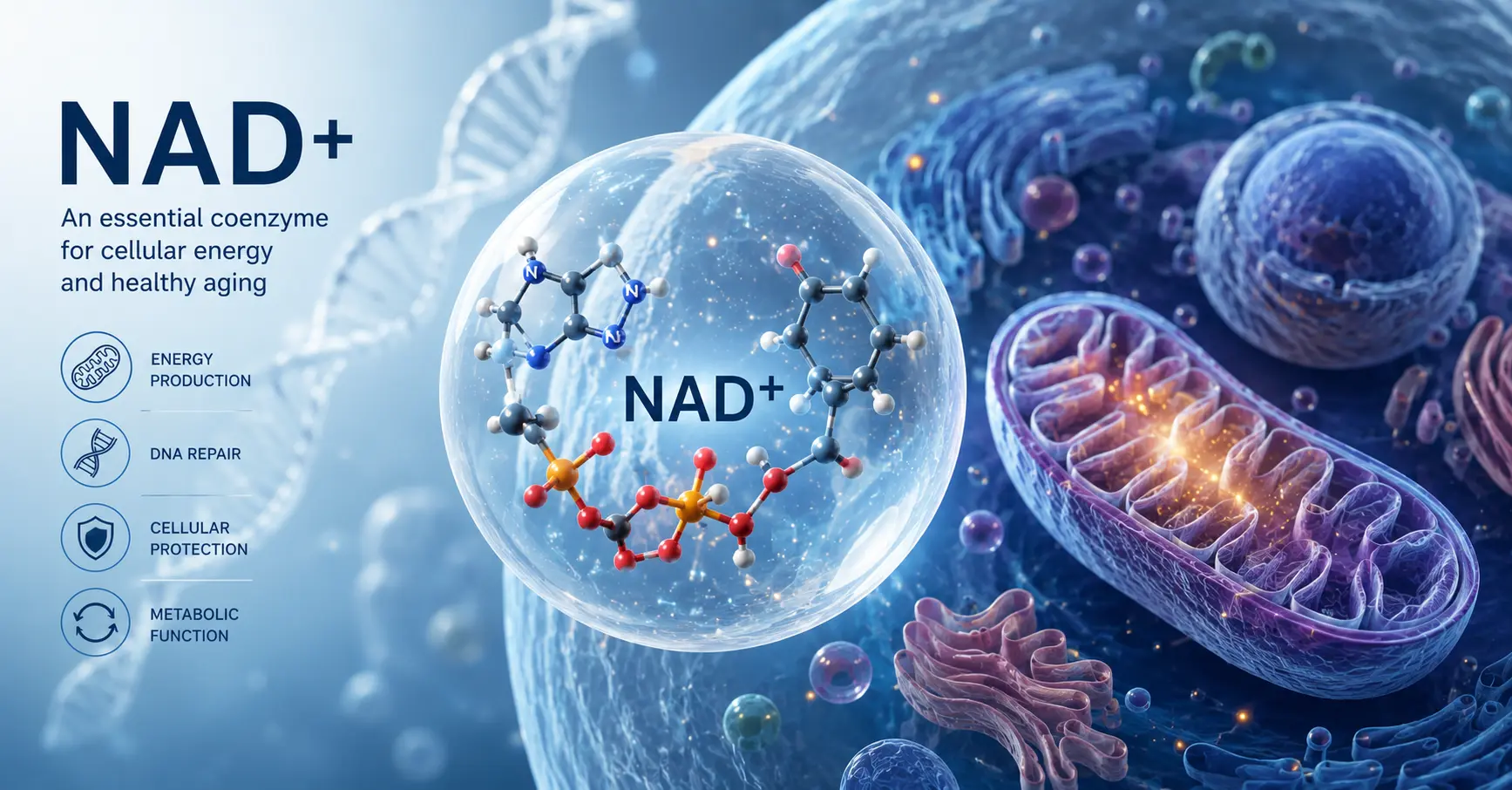
NAD+ stands for nicotinamide adenine dinucleotide. It is a coenzyme present throughout the body and is required for fundamental cellular processes, especially those involving energy transfer.
In practical terms, NAD+ helps cells convert nutrients into usable energy. It also participates in enzyme systems linked to DNA repair, cellular signaling, and stress responses. Because these functions are so central to normal physiology, NAD+ has attracted significant interest in metabolism and longevity research.
That said, NAD+ is not a miracle molecule. Its importance in cellular biology is real, but that does not mean raising NAD+ automatically produces dramatic or uniform health benefits in humans.
What Does NAD+ Stand For?
The full name is nicotinamide adenine dinucleotide. The plus sign in NAD+ refers to its oxidized form. You may also see the related form NADH, which is the reduced version. Together, NAD+ and NADH help shuttle electrons during metabolic reactions.
This redox role is one reason NAD+ is essential to life. Without it, cells would struggle to carry out the reactions needed to generate ATP, the molecule most often described as the body’s cellular energy currency.
Why NAD+ Matters in the Body
NAD+ is involved in several important biological functions:
- Cellular energy metabolism
- Mitochondrial function
- Oxidation-reduction reactions
- Activity of sirtuins and other NAD+-dependent enzymes
- DNA repair pathways
- Cellular signaling and stress responses
These roles help explain why NAD+ is often discussed in relation to fatigue, metabolic health, cognitive aging, and cellular resilience. The key scientific question is not whether NAD+ matters. It clearly does. The more important question is whether a given intervention can meaningfully improve NAD+ availability in a way that produces measurable health outcomes in humans.
Why This Topic Gets So Much Attention?
NAD+ sits at the intersection of metabolism, mitochondrial biology, redox balance, and healthy aging research. That makes it scientifically interesting, but also easy to oversimplify in marketing. A molecule can be central to biology without every supplement approach being clinically proven.
What Happens to NAD+ With Age?
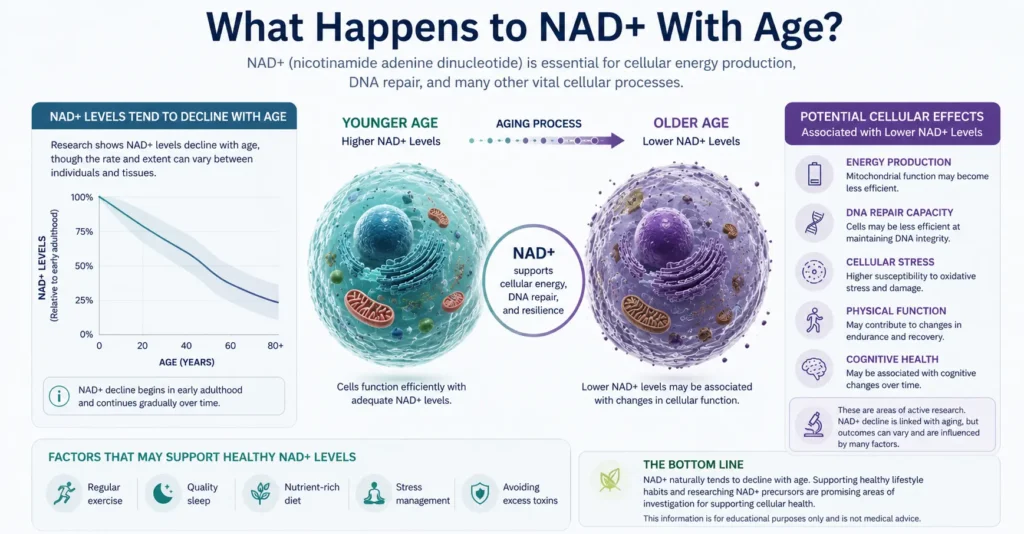
One of the main reasons NAD+ has become so popular is the idea that NAD+ declines with age. There is some scientific basis for this, but the human evidence is more complex than the simple claim that “aging is just low NAD+.”
Reviews of the literature suggest that NAD+ metabolism may change with aging in certain tissues, and researchers are actively studying the consequences of that shift. However, the extent of age-related NAD+ decline in humans, and the functional importance of these changes across different tissues, remain incompletely characterized.
In other words, the research is promising, but some of the strongest public claims are ahead of the evidence.
NAD+ vs NR vs NMN
This distinction is critical. NAD+ itself is the molecule used directly in cells. NR (nicotinamide riboside) and NMN (nicotinamide mononucleotide) are precursors that participate in pathways the body can use to generate NAD+.
Much of the human research on NAD+ augmentation has focused on these precursors rather than direct oral NAD+ itself. Several studies have reported that oral NR and NMN can increase blood NAD+ levels over time. That evidence is useful, but it should not be automatically generalized to every direct NAD+ supplement.
| Compound | What It Is | Main Evidence Theme |
|---|---|---|
| NAD+ | The active coenzyme used in cells | Biologically essential, but product-specific evidence varies |
| NR | NAD+ precursor | Human studies suggest it can raise NAD+ levels in blood |
| NMN | NAD+ precursor | Human interest is growing, with evidence of NAD+-related effects in some studies |
📖 See a Real-World Example of How NAD+ Claims Are Evaluated
Product reviews can help illustrate the difference between promising NAD+ biology and product-specific clinical evidence.
Read Jeemya NAD+ Review: Ingredients, Benefits, Dosage & Is It Worth It? →Potential Benefits of Supporting NAD+
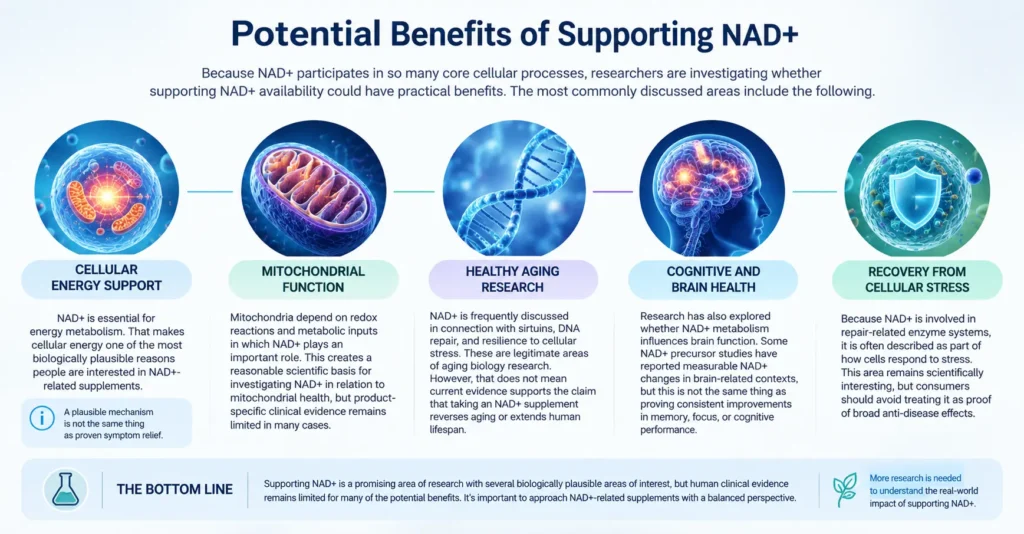
Because NAD+ participates in so many core cellular processes, researchers are investigating whether supporting NAD+ availability could have practical benefits. The most commonly discussed areas include the following.
1. Cellular Energy Support
NAD+ is essential for energy metabolism. That makes cellular energy one of the most biologically plausible reasons people are interested in NAD+-related supplements. Still, a plausible mechanism is not the same thing as proven symptom relief.
2. Mitochondrial Function
Mitochondria depend on redox reactions and metabolic inputs in which NAD+ plays an important role. This creates a reasonable scientific basis for investigating NAD+ in relation to mitochondrial health, but product- specific clinical evidence remains limited in many cases.
3. Healthy Aging Research
NAD+ is frequently discussed in connection with sirtuins, DNA repair, and resilience to cellular stress. These are legitimate areas of aging biology research. However, that does not mean current evidence supports the claim that taking an NAD+ supplement reverses aging or extends human lifespan.
4. Cognitive and Brain Health
Research has also explored whether NAD+ metabolism influences brain function. Some NAD+ precursor studies have reported measurable NAD+ changes in brain-related contexts, but this is not the same thing as proving consistent improvements in memory, focus, or cognitive performance.
5. Recovery From Cellular Stress
Because NAD+ is involved in repair-related enzyme systems, it is often described as part of how cells respond to stress. This area remains scientifically interesting, but consumers should avoid treating it as proof of broad anti-disease effects.
Potential Benefit Does Not Mean Proven Outcome
Most benefits associated with NAD+ should be framed as areas of scientific interest rather than guaranteed real-world effects. In many cases, the evidence is stronger for underlying biology than for specific supplementation outcomes.
What the Science Says
The current scientific picture is best described as promising but still developing. Researchers broadly agree that NAD+ metabolism is important. They also agree that human aging biology is complex and that simple slogans rarely capture the full picture.
Reviews have highlighted several recurring themes:
- NAD+ has clear biological importance across multiple cell systems.
- Human data on tissue-specific age-related NAD+ decline remain more limited than many public claims imply.
- Some NAD+ precursors, especially NR and NMN, have shown the ability to increase NAD+ levels in human studies.
- Increases in biomarkers do not automatically translate into dramatic anti-aging, energy, or cognitive benefits.
- Product-specific evidence remains essential when judging supplements.
This is why evidence-based discussions about NAD+ often sound more cautious than supplement advertising. The biology is compelling. The clinical claims still require careful interpretation.
Current Evidence Summary
- Strongest point: NAD+ is a fundamental coenzyme in cellular metabolism and repair-related pathways.
- Encouraging point: Some precursor research shows human NAD+ increases after supplementation.
- Main limitation: Clinical proof for broad anti-aging outcomes remains limited.
- Practical takeaway: Separate molecule-level importance from product-level proof.
Food Sources and Natural Support
People do not obtain NAD+ from only one source. The body can synthesize it through pathways involving vitamin B3-related compounds such as niacin, nicotinamide, and tryptophan. This is one reason general nutritional status matters when discussing NAD+ metabolism.
Foods associated with vitamin B3 intake include:
- Poultry
- Fish
- Lean meats
- Peanuts
- Mushrooms
- Whole grains
- Fortified foods
Of course, eating a healthy diet is not the same thing as taking an NAD+-focused supplement, but it is a reminder that metabolic health and nutrient adequacy remain foundational.
Are NAD+ Supplements Worth Considering?
That depends on what you expect from them.
If your goal is to explore an emerging area of wellness science with realistic expectations, NAD+-related supplements may be worth learning about. If your goal is a clearly proven anti-aging shortcut, the current evidence does not support that expectation.
In general, supplements in this category are best viewed as research-informed wellness products rather than established medical interventions.
Safety and Limitations
NAD+ research is advancing, but consumers should remain cautious about overpromising. Important limitations include the following:
- Evidence for the molecule’s biological relevance is stronger than evidence for many marketed outcomes.
- Human studies often focus on precursors rather than every direct NAD+ product.
- Long-term effects of specific formulations may not be fully characterized.
- Supplement-drug interactions and individual health factors still need consideration.
Anyone who is pregnant, breastfeeding, under medical supervision, or taking prescription medication should consult a qualified healthcare professional before using NAD+-related supplements.
Frequently Asked Questions
No. NAD+ and NMN are different molecules. NMN is an NAD+ precursor, while NAD+ is the coenzyme itself.
NAD+ is essential for cellular energy metabolism, but that does not mean every NAD+ supplement will produce noticeable increases in how energetic a person feels.
Current evidence does not support the claim that NAD+ supplements reverse human aging. This remains an active area of research rather than a clinically established outcome.
No. Evidence for NR or NMN should not automatically be applied to every direct oral NAD+ supplement, because the molecules and formulations differ.
That depends on personal goals, budget, risk tolerance, and medical context. Some people explore them as wellness products, but it is reasonable to maintain cautious expectations.
📚 Related Articles
Explore more evidence-based guides, supplement reviews, and practical wellness articles to better understand ingredients, benefits, limitations, and how different products compare.
- ➡️ Jeemya NAD+ Review: Ingredients, Benefits, Dosage & Is It Worth It?
- ➡️ Genuine Purity Longevity+ Review
- ➡️ Healthy Aging Supplements Explained
- ➡️ NR vs NMN vs NAD+ guide
- ➡️ What Is Berberine? Benefits, Uses, Side Effects & How It Works
- ➡️ Healthy Weight Benefits: Physical & Mental Health Impact
- ➡️ Berberine Benefits for Blood Sugar and Metabolic Health
- ➡️ Jeemya Berberine HCl 800mg Review
- ➡️ Hydration Benefits: Health Tips for Daily Water Intake
- ➡️ How to Support Healthy Blood Sugar Levels Naturally
- ➡️ The Importance of Quality Sleep for a Healthier Life
- ➡️ The Benefits of Magnesium for Sleep and Stress
- ➡️ Revive Daily Review
- ➡️ Java Burn Review: Ingredients, Benefits, Pros & Cons
Scientific References & Trusted Resources
The following sources provide background on NAD+ metabolism, aging biology, and clinical research on NAD+-related supplementation.
- Covarrubias AJ, Perrone R, Grozio A, Verdin E. NAD+ metabolism and its roles in cellular processes during ageing. Nature Reviews Molecular Cell Biology. 2021.
- Rajman L, Chwalek K, Sinclair DA. Therapeutic Potential of NAD-Boosting Molecules. Cell Metabolism. 2018.
- Martens CR, et al. Chronic nicotinamide riboside supplementation is well-tolerated and elevates NAD+ in healthy middle-aged and older adults. Nature Communications. 2018.
- Airhart SE, et al. An open-label, non-randomized study of the pharmacokinetics of nicotinamide riboside and its effects on blood NAD+ levels in healthy volunteers. PLOS ONE. 2017.
- Experimental Gerontology review literature on age-related NAD+ decline in humans.
- PubMed search for human NR and NAD+ studies.
- NIH Office of Dietary Supplements.