
Author: VitaWeller Health & Wellness Editorial Team
Evidence Reviewed: Peer-reviewed studies, systematic reviews, and guidance from recognized health organizations (NIH, NCCIH, ADA, Mayo Clinic).
Editorial Standards: Evidence-based • Independently researched • Fact-checked before publication
Introduction
What Is Berberine?
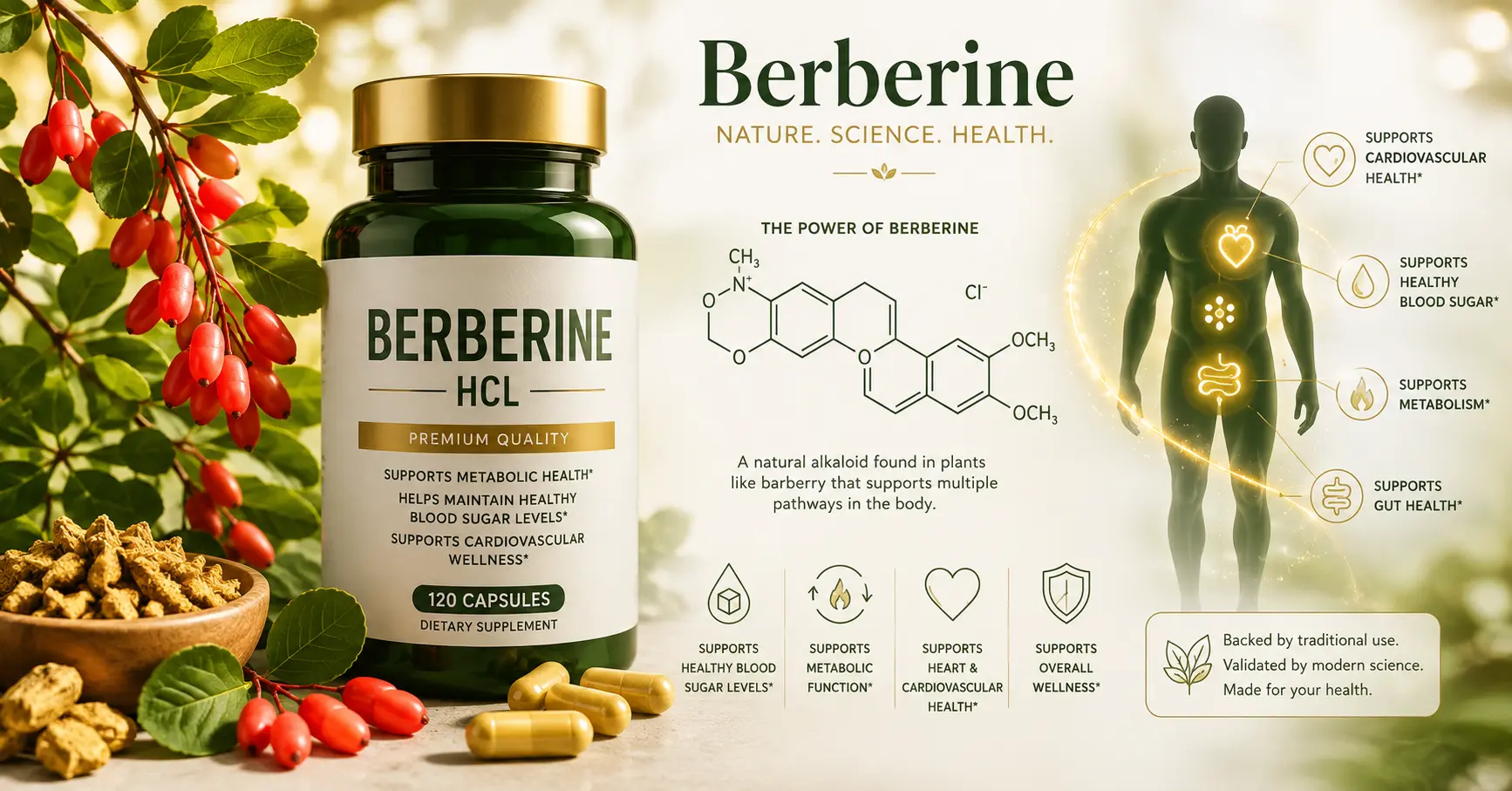
Berberine is a naturally occurring plant compound that belongs to a group of substances called alkaloids. It has been used for centuries in traditional Chinese and Ayurvedic medicine, and today it is one of the most researched natural supplements for supporting healthy blood sugar levels, metabolic health, and cardiovascular wellness.
Modern research suggests that berberine influences several biological pathways involved in glucose metabolism, lipid metabolism, and cellular energy production. While the evidence is promising, berberine is not a substitute for prescribed medications and should be used under appropriate medical guidance when necessary.
If you’re new to berberine, this guide explains what it is, how it works, its potential benefits, possible side effects, and what to look for when choosing a supplement.
🔬 Evidence Review
Evidence Level: ★★★★☆ Strong Evidence
- 🌿 Berberine is a well-established natural compound: Its botanical sources, chemical structure, and traditional use have been documented for centuries and are widely accepted in scientific literature.
- 🧬 Its biological mechanisms are extensively studied: Research supports berberine’s effects on pathways involved in glucose metabolism, lipid metabolism, cellular energy regulation, and gut microbiome interactions.
- 📚 Clinical research continues to grow: Hundreds of laboratory and human studies have investigated berberine, although evidence strength varies depending on the specific health outcome.
- ⚖️ Current takeaway: Berberine is among the most extensively researched dietary supplements for metabolic health, but it should complement—not replace—professional medical advice or prescribed treatment.
Quick Facts About Berberine
| Feature | Information |
|---|---|
| Type | Plant alkaloid |
| Found In | Barberry, Goldenseal, Oregon Grape, Tree Turmeric, Chinese Goldthread |
| Common Use | Blood sugar support, metabolic health |
| Available As | Capsules, tablets, patches |
| Research Status | Hundreds of published clinical studies |
| Prescription Drug? | No |
What Is Berberine Made From?
Berberine is not a synthetic ingredient.
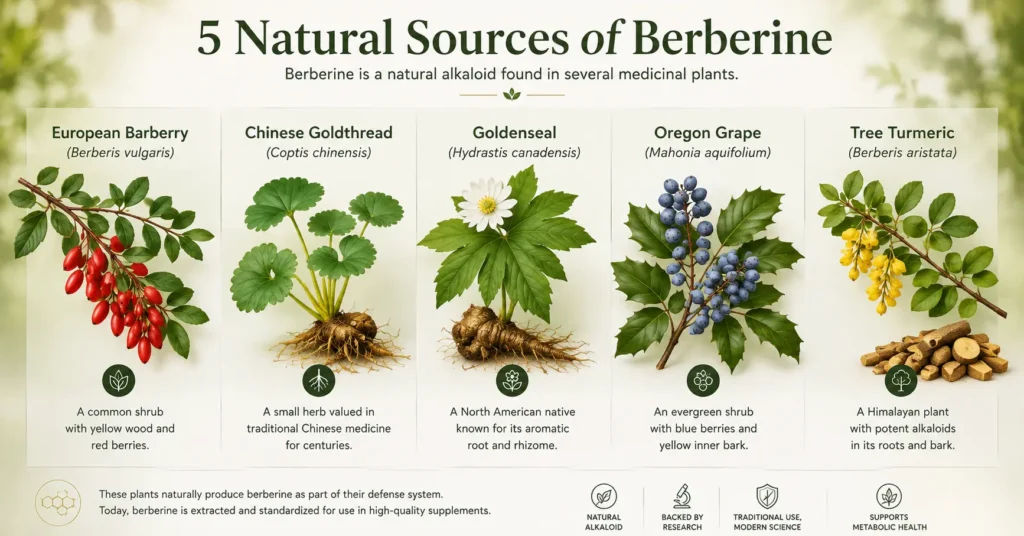
It is naturally extracted from several medicinal plants, including:
- European Barberry (Berberis vulgaris)
- Chinese Goldthread (Coptis chinensis)
- Goldenseal (Hydrastis canadensis)
- Oregon Grape (Mahonia aquifolium)
- Tree Turmeric (Berberis aristata)
These plants naturally produce berberine as part of their defense system against microbes.
Today, most high-quality supplements use purified berberine hydrochloride (Berberine HCl), which provides a standardized amount of the active compound.
How Does Berberine Work?
One reason berberine has attracted scientific interest is that it affects multiple systems in the body rather than targeting just one pathway.
Researchers believe berberine may:
- activate AMP-activated protein kinase (AMPK), often called the body’s “metabolic master switch”
- improve insulin sensitivity
- help regulate glucose production in the liver
- support healthy cholesterol metabolism
- influence the gut microbiome
- reduce oxidative stress and inflammation in certain tissues
Because of these multiple mechanisms, berberine is being studied across several areas of metabolic health.
Learn more about the science behind berberine’s metabolic effects in our comprehensive guide:
👉Berberine Benefits for Blood Sugar and Metabolic Health .
Potential Health Benefits of Berberine
Current research suggests berberine may help support:
Healthy Blood Sugar
This is the most studied application of berberine.
Clinical studies suggest it may help maintain healthy blood glucose levels when combined with a balanced diet and healthy lifestyle.
Metabolic Health
Berberine may support healthy insulin function and overall metabolic efficiency.
Cholesterol Support
Some studies suggest berberine may help maintain healthy LDL cholesterol and triglyceride levels already within the normal range.
Weight Management
Some people use berberine while following calorie-controlled diets because improved metabolic health may indirectly support weight management.
However, berberine should not be viewed as a weight-loss supplement on its own.
Cardiovascular Health
By supporting healthy glucose and lipid metabolism, berberine may also contribute to overall cardiovascular wellness.
🧬 Explore Berberine’s Health Benefits
Learn what current scientific research says about berberine’s effects on blood sugar, metabolic health, cholesterol, weight management, and cardiovascular wellness.
Explore the complete evidence behind berberine’s health benefits. →What Is Berberine Used For?
People commonly take berberine supplements for:
- blood sugar support
- metabolic syndrome
- healthy cholesterol support
- general metabolic wellness
- weight management programs
- longevity-focused health routines
Not every use has the same level of scientific evidence, and research continues to evolve.
Berberine Capsules vs Berberine Patches
Berberine is available in several delivery forms.
Capsules
Capsules remain the most widely studied option.
Advantages include:
- standardized dosage
- most clinical research
- easy comparison between products
Patches
Transdermal berberine patches are a newer option designed for gradual delivery through the skin.
Because this technology is relatively new, clinical evidence remains more limited than for oral supplements.
📖 Wondering Whether Berberine Patches Really Work?
Before learning how to use a berberine patch correctly, it’s worth understanding what current scientific research says about their effectiveness. We reviewed the available evidence to separate facts from marketing claims.
Read the Evidence-Based Guide →🔎 Not Sure Which Berberine Option Is Right for You?
Whether you’re considering berberine patches or traditional capsules, these evidence-based guides can help you choose the option that best fits your needs.
Compare highly rated berberine supplements or read our in-depth review of Purisaki Berberine Patches before making your decision.
How Much Berberine Do People Typically Take?
Many clinical studies have used total daily amounts ranging from 900–1,500 mg, divided into multiple doses.
However, the appropriate amount varies depending on individual circumstances.
Always follow the manufacturer’s directions or your healthcare provider’s advice.
Learn how timing may influence your supplementation routine:
👉 When Is the Best Time to Take Berberine?.
Possible Side Effects
Berberine is generally well tolerated by many healthy adults.
Some people may experience:
- digestive discomfort
- constipation
- diarrhea
- stomach cramps
- nausea
These effects often improve after the body adjusts or when taking smaller divided doses.
Who Should Avoid Berberine?
Berberine may not be appropriate for everyone.
Consult a healthcare professional before using berberine if you:
- are pregnant or breastfeeding
- take diabetes medications
- take blood pressure medications
- take medications metabolized by CYP enzymes
- have liver disease
- have kidney disease
- have a chronic medical condition
Want to Learn More About Berberine Safety?
Discover the most common side effects, potential drug interactions, and who should avoid berberine before starting a supplement.
Read the Safety Guide →How to Choose a Good Berberine Supplement
Not all supplements are identical.
Look for products that provide:
- standardized Berberine HCl
- transparent ingredient lists
- third-party testing when available
- reputable manufacturers
- clear dosage information
Avoid products making unrealistic medical claims.
Compare the Best Berberine Supplements
Berberine patches are just one option. If you’re still deciding which form of berberine is right for you, compare the highest-rated capsules, softgels, and other supplements based on ingredients, dosage, manufacturing quality, and overall value.
- ✔ Compare different berberine forms
- ✔ Review ingredient quality and dosage
- ✔ See our top-rated supplements for 2026
Frequently Asked Questions
Yes. Berberine is a naturally occurring compound extracted from several medicinal plants.
No.
It is a plant alkaloid rather than a vitamin or mineral.
Many studies suggest berberine is generally well tolerated for healthy adults when used appropriately, but it may interact with certain medications.
Research studies typically evaluate outcomes over several weeks to a few months. Individual responses vary.
Many people do, but long-term use should ideally be discussed with a healthcare professional, especially if medications are involved.
No.
Although researchers have compared certain metabolic effects of berberine with metformin in clinical studies, they are fundamentally different. Metformin is a prescription medication, whereas berberine is a dietary supplement. Berberine should never replace prescribed treatment without medical advice.
📌 Key Takeaways
✅ Berberine is a naturally occurring plant alkaloid.
✅ It has been used traditionally for centuries and is now extensively researched.
✅ Most evidence focuses on blood sugar and metabolic health.
✅ Berberine is available as capsules, tablets, and patches.
✅ It may interact with medications, so medical guidance is important for some individuals.
✅ Choosing a high-quality, standardized supplement is essential.
📚 Related Articles
Continue exploring our evidence-based guides on berberine supplements, blood sugar support, and metabolic health.
- ➡️ Best Berberine Supplements for Blood Sugar Support (2026)
- ➡️ Berberine Benefits for Blood Sugar and Metabolic Health
- ➡️ When Is the Best Time to Take Berberine?
- ➡️ Genuine Purity Berberine HCL Review
- ➡️ Jeemya Berberine HCl 800mg Review
- ➡️ Purisaki Berberine Review (2026)
- ➡️ Berberine Patches vs Capsules: Which Option Is Better?
- ➡️ How to Use Berberine Patches Correctly
- ➡️ Do Berberine Patches Work? What the Science Really Says (2026)
- ➡️ How to Support Healthy Blood Sugar Levels Naturally
- ➡️ Sugar Defender Review: Natural Blood Sugar Support for Energy & Metabolism
- ➡️ GlucoTrust Review: Natural Blood Sugar Support Supplement
🔬 Scientific References
The information in this article is based on peer-reviewed scientific literature and review papers examining berberine, metabolic health, and transdermal drug delivery.
- Cicero AF, Baggioni A. Berberine and Its Role in Chronic Disease. Adv Exp Med Biol. 2016.
- Imenshahidi M, Hosseinzadeh H. Berberine and Barberry (Berberis vulgaris): A Clinical Review. Phytotherapy Research.
- Sun A, et al. Molecular mechanisms, targets and clinical potential of berberine in regulating metabolism: A review focussing on databases and molecular docking studies. Frontiers in Pharmacology. 2024
- Yin J, Xing H, Ye J. Efficacy of Berberine in Patients with Type 2 Diabetes Mellitus. Metabolism.
- Pirillo A, Catapano AL. Berberine in the Treatment of Diabetes Mellitus: A Review. Endocrine, Metabolic & Immune Disorders Drug Targets.
- Lan T et al. A Mechanistic Review on How Berberine Use Combats Diabetes and Related Complications. Biomedicines. 2024.
- Office of Dietary Supplements (NIH)
- National Center for Complementary and Integrative Health (NCCIH)
📢 Affiliate Disclosure
Some links on VitaWeller are affiliate links. If you purchase a product through these links, we may earn a small commission at no additional cost to you. This helps support our website and allows us to continue creating evidence-based health content. Our recommendations are based on independent research, product evaluation, and editorial standards—not on affiliate partnerships.