

Author: VitaWeller Health & Wellness Editorial Team
Evidence Reviewed: Peer-reviewed studies, systematic reviews, and guidance from recognized health organizations (NIH, NCCIH, ADA, Mayo Clinic).
Editorial Standards: Evidence-based • Independently researched • Fact-checked before publication
Introduction
Berberine has become one of the most popular natural supplements for supporting healthy blood sugar levels, metabolism, and cardiovascular health. While research suggests it may offer several benefits, many people ask an equally important question:
Is berberine safe?
Like any supplement, berberine can cause side effects, interact with medications, and may not be suitable for everyone. Fortunately, most side effects are mild and often improve as the body adapts or when the supplement is taken correctly.
In this guide, you’ll learn the most common berberine side effects, who should avoid taking it, potential drug interactions, and practical tips for reducing unwanted symptoms.
Key Takeaways
Berberine is generally considered safe for most healthy adults when taken as directed, but it can cause mild digestive side effects and may interact with certain medications.
In this guide, you’ll learn:
✅ The most common berberine side effects
✅ Who should avoid taking berberine
✅ Which medications may interact with berberine
✅ How to reduce the risk of side effects
✅ When to stop taking berberine and seek medical advice
Quick Answer
For most healthy adults, berberine is considered safe when taken at recommended doses.
The most common side effects include:
- Mild stomach discomfort
- Diarrhea
- Constipation
- Gas
- Bloating
- Nausea
Serious side effects are uncommon but may occur in people taking certain medications or those with specific medical conditions. Always consult a healthcare professional before starting berberine if you have an existing health condition or take prescription medications.
At a Glance: Common vs. Rare Side Effects
Important: If you experience severe symptoms such as difficulty breathing, persistent vomiting, signs of very low blood sugar, or yellowing of the skin or eyes, stop taking berberine and seek medical attention immediately.
| Common Side Effects | Rare Side Effects |
|---|---|
| Diarrhea | Allergic reactions (rash, swelling, difficulty breathing) |
| Constipation | Severe hypoglycemia (when combined with diabetes medications) |
| Stomach discomfort | Excessive drop in blood pressure (in susceptible individuals) |
| Bloating | Persistent vomiting |
| Gas | Unusual bleeding or bruising (possible medication interaction) |
| Mild nausea | Yellowing of the skin or eyes (requires immediate medical evaluation) |
Good to know: Most people who experience side effects report mild digestive symptoms that improve after a few days or by reducing the dosage. Serious side effects are uncommon and are more likely to occur in people taking prescription medications or those with underlying medical conditions.
What Is Berberine?
Berberine is a natural plant compound found in several herbs, including barberry, goldenseal, Oregon grape, and tree turmeric.
It has been studied for its potential role in supporting:
- Healthy blood sugar metabolism
- Insulin sensitivity
- Cholesterol levels
- Cardiovascular health
- Weight management
Its primary mechanism involves activating AMPK, often called the body’s metabolic “master switch.”
For a complete overview of its benefits, see our guide:
👉 Berberine Benefits for Blood Sugar and Metabolic Health
Common Berberine Side Effects

Most reported side effects affect the digestive system.
Diarrhea
Some people experience loose stools during the first few days of supplementation. This usually improves as the digestive system adapts.
Constipation
Interestingly, others experience the opposite effect. Changes in gut bacteria and intestinal movement may contribute to temporary constipation.
Stomach Pain
Mild abdominal discomfort or cramping can occur, particularly when starting with higher doses.
Gas and Bloating
Berberine influences gut bacteria, which may temporarily increase gas production.
Nausea
Taking berberine on an empty stomach may increase the chance of nausea.
Many users find that taking it with meals significantly reduces this symptom.
Why Does Berberine Cause Digestive Symptoms?
Berberine has natural antimicrobial properties that influence the balance of bacteria in the digestive tract.
Researchers believe digestive symptoms may occur because:
- Gut bacteria temporarily change
- Intestinal motility is altered
- The body is adapting to the supplement
For most users, these effects become less noticeable after one to two weeks.
Who Should Avoid Berberine?
Although generally safe, berberine is not appropriate for everyone.
You should avoid berberine unless advised by your healthcare provider if you are:
- Pregnant
- Breastfeeding
- Taking diabetes medications
- Taking blood pressure medication
- Taking blood-thinning medication
- Living with severe liver disease
- Living with severe kidney disease
- Under 18 years of age
Berberine Drug Interactions
One of the most important safety considerations involves interactions with medications.
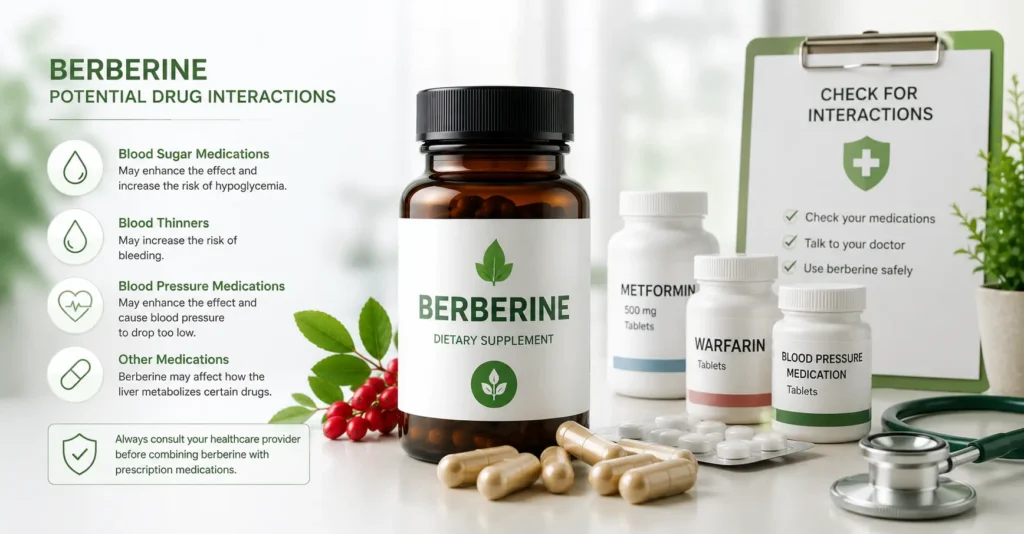
Berberine may interact with:
Diabetes medications
Because berberine may help lower blood sugar, combining it with diabetes medication could increase the risk of hypoglycemia.
Examples include:
- Metformin
- Insulin
- Sulfonylureas
Blood Pressure Medications
Berberine may contribute to lower blood pressure.
Using it alongside antihypertensive medications may increase the risk of dizziness or low blood pressure.
Blood Thinners
Berberine may affect how some anticoagulant medications are processed.
Always seek medical advice before combining berberine with blood thinners.
Medications Processed by the Liver
Berberine may influence enzymes involved in drug metabolism, potentially affecting blood levels of certain medications.
Is Berberine Safe for Long-Term Use?
Current research suggests that berberine is generally well tolerated in studies lasting several months.
However, evidence regarding continuous use over many years remains limited.
Many healthcare professionals recommend periodic evaluation and discussing long-term supplementation with a qualified healthcare provider, especially if taking prescription medications.
How to Reduce Berberine Side Effects
If you’re new to berberine, these simple strategies may help:
Start with a lower dose
Beginning with a smaller amount allows your body to adjust gradually.
Take it with food
This may reduce stomach discomfort and nausea.
Divide your daily dose
Instead of taking one large serving, split it into two or three smaller doses throughout the day.
Stay hydrated
Adequate water intake may help reduce digestive discomfort.
Choose a high-quality supplement
Products that undergo third-party testing and provide transparent ingredient labeling may offer better consistency and purity.
🔍 Looking for a trusted product?
Choosing a high-quality berberine supplement with the right dosage and formulation may help improve your overall experience. Explore our top picks and what to look for before buying.
See Best Berberine Supplements →📦 Product Spotlight
Looking for a capsule-free alternative to traditional berberine supplements?
Some users prefer alternative delivery methods instead of traditional capsules. Learn more about Purisaki Berberine Patches and how this format compares.
Read the Full Purisaki Review →When Should You Stop Taking Berberine?
Discontinue use and seek medical advice if you experience:
- Severe allergic reactions
- Persistent vomiting
- Severe abdominal pain
- Fainting
- Symptoms of very low blood sugar
- Unusual bleeding
- Yellowing of the skin or eyes
These reactions are uncommon but require prompt medical attention.
Frequently Asked Questions
Yes. Mild diarrhea is one of the most commonly reported side effects, particularly during the first week.
For many healthy adults, daily use at recommended doses appears safe for several months. Long-term use should be discussed with a healthcare professional.
Current evidence does not suggest that berberine damages the liver in healthy individuals when used appropriately. However, people with existing liver disease should consult their physician before use.
Berberine and metformin may have additive effects on blood sugar. They should only be combined under medical supervision.
Pregnant or breastfeeding women, children, and individuals taking certain prescription medications should avoid berberine unless advised by a healthcare professional.
Yes. While diarrhea is more commonly reported, some people experience constipation, especially during the first few days of supplementation. Staying hydrated, taking berberine with food, and starting with a lower dose may help reduce digestive discomfort.
Conclusion
For most healthy adults, berberine has a favorable safety profile when used responsibly. The most common side effects are digestive and are usually mild and temporary.
The greatest safety concerns involve drug interactions and use in people with certain medical conditions. Choosing a quality supplement, starting with a lower dose, and consulting a healthcare professional when appropriate can help minimize risks.
If you’re considering adding berberine to your wellness routine, selecting a reputable product is just as important as taking it correctly.
📚 Related Articles
Continue exploring our evidence-based guides on berberine supplements, blood sugar support, and metabolic health.
- ➡️ Best Berberine Supplements for Blood Sugar Support (2026)
- ➡️ Berberine Benefits for Blood Sugar and Metabolic Health
- ➡️ When Is the Best Time to Take Berberine?
- ➡️ Genuine Purity Berberine HCL Review
- ➡️ Jeemya Berberine HCl 800mg Review
- ➡️ Purisaki Berberine Review (2026)
- ➡️ Berberine Patches vs Capsules: Which Option Is Better?
- ➡️ How to Use Berberine Patches Correctly
- ➡️ Do Berberine Patches Work? What the Science Really Says (2026)
- ➡️ How to Support Healthy Blood Sugar Levels Naturally
- ➡️ Sugar Defender Review: Natural Blood Sugar Support for Energy & Metabolism
- ➡️ GlucoTrust Review: Natural Blood Sugar Support Supplement
🔬 Scientific References
The information in this article is based on peer-reviewed scientific literature and review papers examining berberine, metabolic health, and transdermal drug delivery.
- Yin J, et al. Efficacy of Berberine in Patients with Type 2 Diabetes Mellitus. Metabolism.
- Efficacy and Safety of Berberine Alone for Several Metabolic Disorders: A Systematic Review and Meta-analysis.
- Berberine and Health Outcomes: An Overview of Systematic Reviews (2025)
- NIH Office of Dietary Supplements
- National Center for Complementary and Integrative Health (NCCIH)
- Additional scientific evidence is available through the U.S. National Library of Medicine’s PubMed database.
- LiverTox (NIH) – Berberine
- PubMed – Berberine: therapeutic potential and adverse effects
📢 Affiliate Disclosure
Some links on VitaWeller are affiliate links. If you purchase a product through these links, we may earn a small commission at no additional cost to you. This helps support our website and allows us to continue creating evidence-based health content. Our recommendations are based on independent research, product evaluation, and editorial standards—not on affiliate partnerships.
⚕️ Medical Disclaimer
The information provided on VitaWeller is intended for educational purposes only and should not be considered medical advice, diagnosis, or treatment. Always consult a qualified healthcare professional before starting any supplement, medication, or lifestyle change, especially if you have a medical condition, are pregnant or breastfeeding, or take prescription medications.
For full details, please see our Medical Disclaimer.