
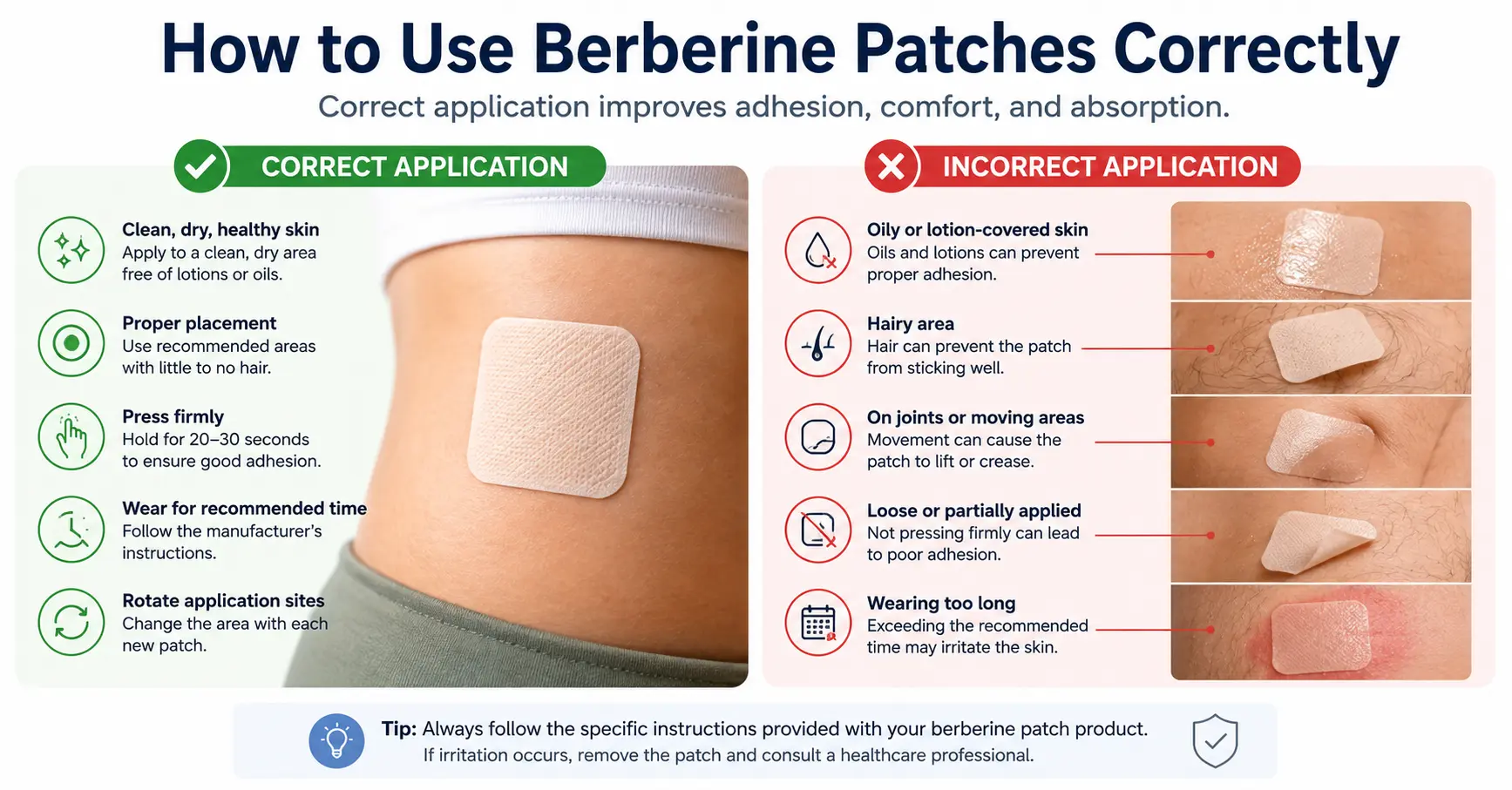
Everything you need to know about applying, wearing, and replacing berberine patches safely.
Author: VitaWeller Health & Wellness Editorial Team
Evidence Reviewed: Peer-reviewed studies, systematic reviews, and guidance from recognized health organizations (NIH, NCCIH, ADA, Mayo Clinic).
Editorial Standards: Evidence-based • Independently researched • Fact-checked before publication
Introduction
Berberine patches have become an increasingly popular alternative to traditional berberine capsules, offering a convenient option for people who prefer not to take oral supplements. However, applying a patch correctly is essential for ensuring it stays in place, feels comfortable, and is used according to the manufacturer’s recommendations.
In this guide, you’ll learn how to use berberine patches step by step, including where to apply them, how long to wear them, how often to replace them, and the most common mistakes to avoid. You’ll also discover practical tips for improving adhesion and reducing the risk of skin irritation.
While this article explains current best practices for using berberine patches, it’s important to note that published clinical research on commercial berberine patches is still limited. Whenever possible, follow the instructions provided with your specific product and consult a healthcare professional if you have questions about using berberine supplements.
🔬 Evidence Review
Evidence Level: ★★★☆☆ Moderate Evidence
- ✅ Best practices are well established: The application steps in this guide are based on widely accepted principles of transdermal patch use and skin care.
- 🩹 Manufacturer instructions are generally consistent: Most berberine patch brands recommend similar application techniques, wear times, and site rotation practices.
- ⚠️ Limited clinical evidence for commercial berberine patches: There are currently no large published human clinical trials identifying an “optimal” way to use commercially available berberine patches.
- 💡 Current takeaway: Applying the patch to clean, dry skin and following the manufacturer’s directions are the most practical evidence-informed recommendations currently available.
What Are Berberine Patches?
Berberine patches are adhesive transdermal patches designed to deliver berberine through the skin over an extended period. Unlike capsules or tablets, they don’t require swallowing and are marketed as a convenient alternative for people who dislike oral supplements.
Instead of releasing all of the ingredient at once, a patch is intended to remain on the skin for several hours, allowing continuous contact with the application site.
It’s important to understand, however, that scientific evidence supporting commercial berberine patches is still limited. While transdermal drug delivery is a well-established technology for certain medications, there are currently few published human studies evaluating berberine patches sold as dietary supplements.
That means consumers should approach marketing claims with realistic expectations.
Want to know whether they actually work?
If you’re still deciding whether patches are worth trying, read our evidence-based review:
Wondering Whether Berberine Patches Really Work?
Before learning how to use a berberine patch correctly, it’s worth understanding what current scientific research says about their effectiveness. We reviewed the available evidence to separate facts from marketing claims.
Read the Evidence-Based Guide →Why Proper Application Matters
Applying a berberine patch correctly may seem straightforward, but small mistakes can reduce adhesion or make the patch uncomfortable to wear.
Proper application helps:
- keep the patch securely attached
- reduce skin irritation
- minimize premature peeling
- ensure consistent contact with the skin
- improve overall user experience
Although manufacturers often advertise continuous delivery, wearing the patch correctly is essential for whatever delivery mechanism the product is designed to provide.
Before You Apply a Berberine Patch
Taking a minute to prepare your skin can make a significant difference.
Choose Clean Skin
Wash the area with mild soap and water.
Avoid:
- body lotion
- oils
- sunscreen
- deodorant
- powders
These products can reduce the adhesive’s ability to stick properly.
Dry the Area Completely
Moisture is one of the most common reasons patches peel off early.
After washing:
- pat the skin dry
- wait a few minutes
- avoid applying immediately after a hot shower if you’re still sweating
Remove Excess Hair if Necessary
Hair doesn’t prevent the patch from working, but it can:
- reduce adhesion
- make removal uncomfortable
- cause the edges to lift
If needed, trim the hair rather than shaving immediately beforehand, as freshly shaved skin may be more sensitive.
Check Your Skin
Do not apply a patch to skin that is:
- broken
- sunburned
- irritated
- inflamed
- infected
- affected by eczema or dermatitis
Healthy, intact skin provides the best surface for adhesive patches.
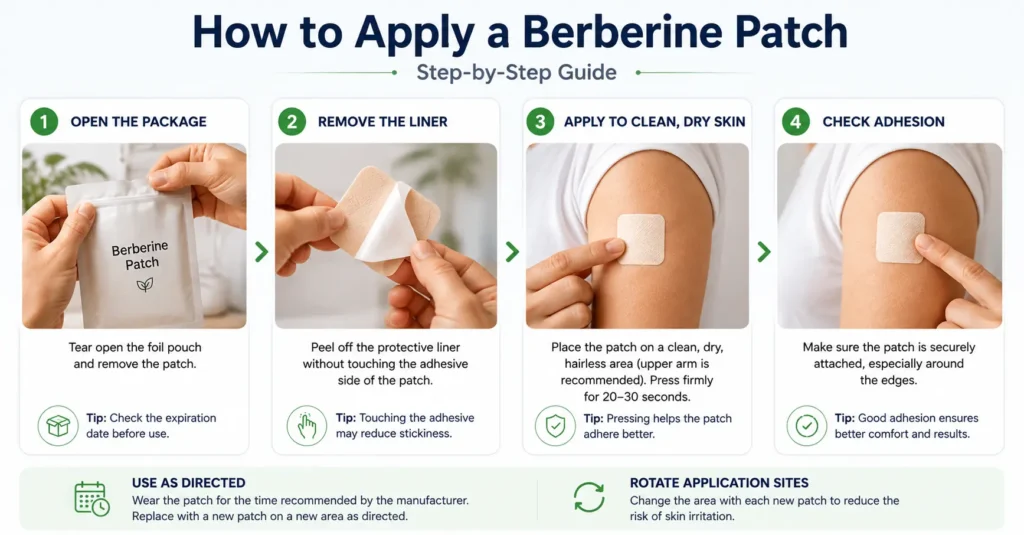
Step-by-Step: How to Apply a Berberine Patch
Following these simple steps can help you get the best experience.
Step 1 – Wash Your Hands
Clean hands reduce the chance of contaminating the adhesive surface.
Step 2 – Open the Package Carefully
Avoid touching the adhesive more than necessary.
Holding the patch by its edges helps preserve its stickiness.
Step 3 – Remove the Protective Liner
Peel away the backing slowly.
Do not fold or crease the patch.
Step 4 – Apply to Clean, Dry Skin
Press the adhesive side firmly against your chosen area.
Use the palm of your hand for around 20–30 seconds to ensure good contact.
Pay special attention to the edges.
Step 5 – Check That the Patch Is Fully Attached
Make sure:
- all corners are flat
- no air bubbles remain
- edges aren’t lifting
If the patch begins peeling shortly after application, it may have been placed on oily or damp skin.
Where Should You Apply a Berberine Patch?
Different brands may recommend different locations, so always read the manufacturer’s instructions first.
In general, patches adhere best to areas that are:
- clean
- relatively hairless
- dry
- flat
- not exposed to constant rubbing from clothing
Common application sites include:
- upper arm
- shoulder
- upper back
- chest (if recommended by the manufacturer)
Avoid placing a patch on:
- joints that bend frequently
- areas with heavy sweating
- irritated skin
- areas that experience significant friction from clothing
Rotating the application site each time you replace a patch may also help reduce the likelihood of skin irritation.
⭐ Product Review
Looking for a reputable berberine patch brand?
Not all patches use the same ingredients, adhesive quality, or manufacturing standards.
Read our in-depth review covering the ingredients, how the patches work, customer feedback, pros and cons, and whether Purisaki Berberine offers good value compared with traditional berberine supplements.
Can You Apply More Than One Patch?
Unless the manufacturer specifically recommends otherwise, do not wear multiple patches at the same time.
Using more patches does not necessarily improve results and may increase the likelihood of skin irritation or unnecessary ingredient exposure.
Always follow the serving directions provided by the product manufacturer.
📌 Key Takeaways So Far
✔ Clean and dry skin is essential.
✔ Apply the patch firmly for 20–30 seconds.
✔ Choose relatively hairless, low-friction areas.
✔ Rotate application sites when possible.
✔ Follow the manufacturer’s instructions rather than assuming all berberine patches are identical.
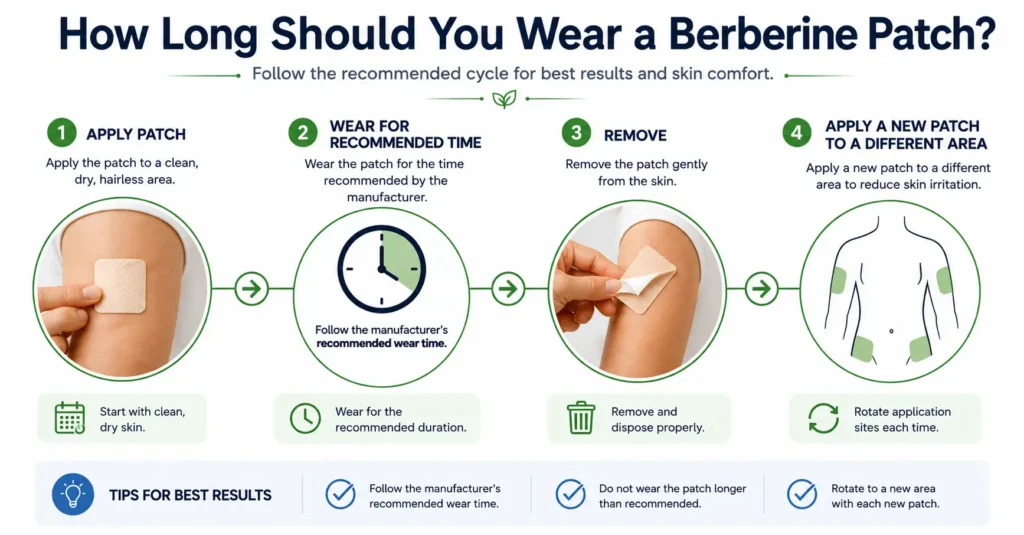
How Long Should You Wear a Berberine Patch?
The recommended wear time depends on the manufacturer, as there is no standardized dosing schedule for berberine patches.
Many brands recommend wearing a patch for 8 to 24 hours, while others suggest replacing it every day. Always follow the instructions provided with your specific product rather than assuming all patches work the same way.
Wearing a patch longer than recommended is unlikely to provide additional benefits and may increase the chance of skin irritation.
When Should You Replace a Berberine Patch?
Replace your patch according to the manufacturer’s instructions.
As a general best practice:
- Remove the old patch before applying a new one.
- Dispose of the used patch safely, keeping it away from children and pets.
- Apply the next patch to a different area of skin whenever possible.
- Avoid using the exact same location repeatedly for several days.
Rotating application sites helps reduce irritation and allows the skin time to recover.
Can You Shower While Wearing a Berberine Patch?
This depends on the adhesive quality and the manufacturer’s recommendations.
Many users find that a properly applied patch remains attached during normal daily activities, including a quick shower. However, prolonged exposure to water may weaken the adhesive.
To help the patch stay in place:
- Avoid very hot showers.
- Do not scrub directly over the patch.
- Pat the area dry instead of rubbing it with a towel.
If the patch falls off, consult the product instructions to determine whether it should be replaced immediately.
Can You Exercise While Wearing a Patch?
Light to moderate exercise is generally not a problem, provided the patch remains securely attached.
However, excessive sweating may:
- loosen the adhesive,
- cause the edges to lift,
- shorten the wear time.
If you exercise regularly, consider applying the patch:
- after showering,
- once your skin is completely dry,
- to an area less likely to experience friction from clothing.
Common Mistakes to Avoid
Many issues reported by users are related to application rather than the patch itself.
Applying the Patch to Oily Skin
Lotions, moisturizers, and oils reduce adhesion and can cause the patch to peel off prematurely.
Always apply the patch to clean, dry skin.
Using the Same Spot Every Day
Repeated application to the same area may increase the risk of redness or irritation.
Rotate the application site each time you use a new patch.
Touching the Adhesive Too Much
Handling the sticky surface can reduce its ability to adhere properly.
Try to hold the patch by its edges when applying it.
Ignoring Skin Irritation
Mild redness after removing an adhesive patch can occur.
However, remove the patch and discontinue use if you experience:
- significant itching,
- blistering,
- swelling,
- persistent pain,
- signs of an allergic reaction.
If symptoms are severe or continue after removing the patch, seek medical advice.
Expecting Immediate Results
Some advertisements imply that berberine patches work almost instantly.
In reality, there is currently limited clinical evidence evaluating commercial berberine patches in humans, and individual experiences vary considerably.
Maintaining realistic expectations is important.
What Does the Research Say About Berberine Patches?
Commercial berberine patches are relatively new, and published human clinical studies remain limited. We’ve reviewed the available research, expert opinions, and current evidence to explain what is known—and what still needs further investigation.
Explore the Scientific Evidence →Tips for Better Results
While evidence on berberine patches is still emerging, these practical habits can improve the overall experience.
✅ Apply the Patch at the Same Time Each Day
Creating a routine makes it easier to remember when to replace the patch.
✅ Store Patches Properly
Keep unused patches:
- in their original packaging,
- away from excessive heat,
- protected from moisture,
- out of direct sunlight.
✅ Monitor Your Skin
Check the application area each time you remove a patch.
If irritation develops, allow the skin to recover before using the same location again.
✅ Follow a Healthy Lifestyle
No supplement or patch can replace healthy habits.
For people interested in supporting normal blood sugar and metabolic health, patches should be viewed as one possible component of a broader wellness strategy that includes:
- a balanced diet,
- regular physical activity,
- adequate sleep,
- weight management,
- following medical advice when appropriate.
Considering Other Berberine Options?
While patches are convenient, they are only one way to supplement berberine.
Many people still choose traditional capsules because they have been studied more extensively in clinical research.
Compare the Best Berberine Supplements
Berberine patches are just one option. If you’re still deciding which form of berberine is right for you, compare the highest-rated capsules, softgels, and other supplements based on ingredients, dosage, manufacturing quality, and overall value.
- ✔ Compare different berberine forms
- ✔ Review ingredient quality and dosage
- ✔ See our top-rated supplements for 2026
Frequently Asked Questions
Most manufacturers recommend clean, dry, relatively hairless areas such as the upper arm, shoulder, or upper back. Always follow the instructions provided with your specific product.
Unless the manufacturer specifically instructs otherwise, wearing multiple patches at the same time is not recommended.
No.
Cutting a patch may affect how it adheres to the skin and could alter the way the ingredients are intended to be delivered.
Follow the manufacturer’s instructions. Some products recommend applying a new patch, while others advise waiting until the next scheduled application.
That depends on your preferences and your healthcare provider’s advice.
Capsules have been investigated far more extensively in clinical studies than commercial berberine patches, which currently have limited published human evidence.
Most healthy adults tolerate adhesive patches without major problems, but some people may experience mild skin irritation from the adhesive.
Anyone who is pregnant, breastfeeding, taking prescription medications, or managing a medical condition should consult a healthcare professional before using berberine supplements in any form.
Our Recommendation
If you’re considering berberine patches, these are the two resources we recommend reading next.
🔎 Not Sure Which Berberine Option Is Right for You?
Whether you’re considering berberine patches or traditional capsules, these evidence-based guides can help you choose the option that best fits your needs.
Compare highly rated berberine supplements or read our in-depth review of Purisaki Berberine Patches before making your decision.
Final Thoughts
Berberine patches offer a convenient alternative for people who prefer not to take capsules. Applying them correctly can improve comfort, help the patch stay in place, and reduce the likelihood of skin irritation.
However, it’s equally important to understand the current evidence. While transdermal delivery is an established technology for certain medications, published clinical research on commercially available berberine patches remains limited. As a result, consumers should be cautious about marketing claims that promise dramatic or guaranteed outcomes.
If you decide to try a berberine patch, choose a reputable brand, follow the manufacturer’s instructions carefully, and maintain realistic expectations. Pairing any supplement with healthy lifestyle habits remains the most evidence-based approach to supporting metabolic health.
📚 Related Articles
Continue exploring our evidence-based guides on berberine supplements, blood sugar support, and metabolic health.
- ➡️ Purisaki Berberine Review (2026)
- ➡️ Berberine Patches vs Capsules: Which Option Is Better?
- ➡️ Do Berberine Patches Work? What the Science Really Says (2026)
- ➡️ Berberine Benefits for Blood Sugar and Metabolic Health
- ➡️ Best Berberine Supplements for Blood Sugar Support (2026)
- ➡️ When Is the Best Time to Take Berberine?
- ➡️ Berberine Side Effects: What You Should Know
- ➡️ How to Support Healthy Blood Sugar Levels Naturally
🔬 Scientific References
The information in this article is based on peer-reviewed scientific literature and review papers examining berberine, metabolic health, and transdermal drug delivery.
📢 Affiliate Disclosure
Some links on VitaWeller are affiliate links. If you purchase a product through these links, we may earn a small commission at no additional cost to you. This helps support our website and allows us to continue creating evidence-based health content. Our recommendations are based on independent research, product evaluation, and editorial standards—not on affiliate partnerships.