
Author: VitaWeller Health & Wellness Editorial Team
Evidence Reviewed: Peer-reviewed studies, systematic reviews, and guidance from recognized health organizations (NIH, NCCIH, ADA, Mayo Clinic).
Editorial Standards: Evidence-based • Independently researched • Fact-checked before publication
Introduction
Almost every week brings a new supplement promising to slow aging, protect the heart, sharpen the mind, or give you back your energy. The labels are appealing, the language is confident, and the science behind them ranges from solid to almost nonexistent. Figuring out which is which can feel like a full-time job.
This guide takes a calmer approach. It looks at the supplements that come up most often in healthy aging conversations, explains what each one is generally used for, and sorts the claims into what the research supports, what it only hints at, and what it does not show. It also points to a few places where a supplement is clearly useful, because some are.
Supplements are not a substitute for the habits that have the strongest evidence for healthy aging, such as regular physical activity, enough sleep, a varied diet, not smoking, and managing blood pressure and blood sugar. Think of them, at best, as small additions to that foundation.
Evidence Review
Evidence Level: ★★★☆☆ Mixed, with some clear winners and many gaps
- 🔍 Some supplements address a real, measurable deficiency. In those cases, correcting the deficiency is well supported. Vitamin D is the clearest example.
- 🏋️ Creatine has solid evidence for preserving muscle strength and mass in older adults, particularly when combined with resistance training.
- 🧪 Many popular ingredients, including several antioxidants and some longevity-branded compounds, have promising laboratory or animal data but weak or inconsistent results in people.
- 📊 Large trials in generally healthy adults have often failed to show dramatic benefits from supplements, which is why broad claims about slowing aging deserve skepticism.
The honest summary is that a few supplements have useful, well-tested roles, while most of the “healthy aging” category is still experimental.
Quick Answer
The supplements with the strongest support for healthy aging are the ones that correct a clear shortfall or target a specific, measurable outcome. Vitamin D matters most when levels are low. Creatine has good evidence for muscle strength and mass in older adults who also do resistance training. Omega-3 fatty acids and magnesium have more mixed evidence and tend to be most useful when your intake is low.
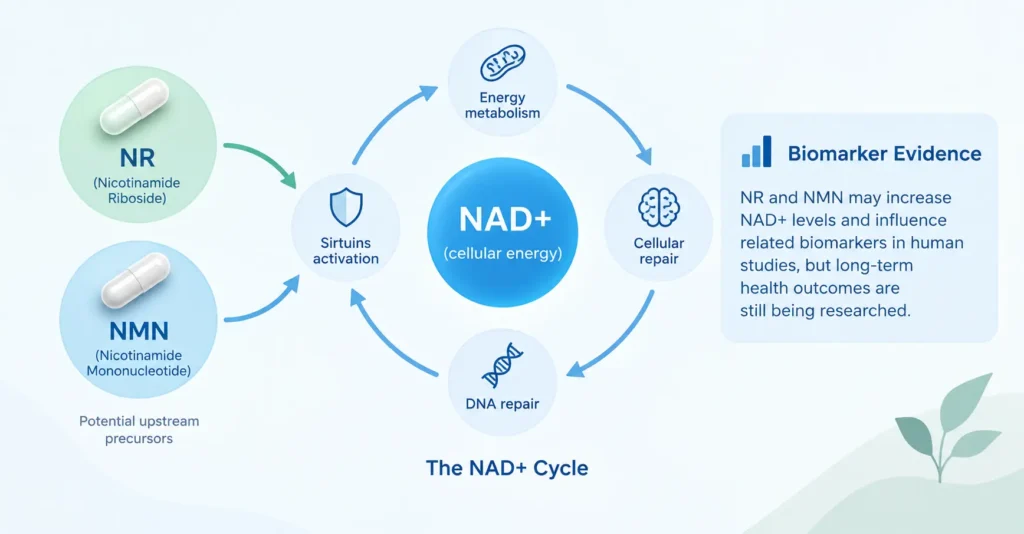
High-dose antioxidants, many multi-ingredient “anti-aging” formulas, and most branded longevity compounds have not shown reliable benefits in people. NAD+ precursors such as NR and NMN are an active research area, but current human evidence is still mostly about blood biomarkers rather than long-term health outcomes.
Table of Contents
- What Does “Healthy Aging” Mean?
- How to Read Supplement Claims
- Vitamin D
- Omega-3 Fatty Acids
- Creatine and Protein
- Magnesium
- Multivitamins
- Antioxidants and the High-Dose Problem
- NAD+ Precursors: NR and NMN
- Other Popular Ingredients
- Healthy Aging Supplements: Quick Comparison
- A Practical Checklist Before You Buy
- Final Verdict
- Frequently Asked Questions
- Scientific References
What Does “Healthy Aging” Mean?
Healthy aging usually means keeping your body and mind functional for as long as possible. That includes staying strong enough to climb stairs and carry groceries, keeping bones resilient, maintaining a stable metabolism, and thinking clearly. It is a practical goal, and it is different from simply trying to extend lifespan at any cost.
Much of the research on aging points to a familiar set of levers: physical activity, muscle maintenance, cardiovascular health, sleep, social connection, and avoiding tobacco. Supplements sit at the edges of that list. Some can fill a real gap. Others are marketed as if they could replace the basics, which is where the trouble starts.
How to Read Supplement Claims
Most supplement marketing mixes three different kinds of evidence without distinguishing among them. Laboratory and animal studies can suggest a mechanism. Small human studies can show that a marker changes. Large trials with meaningful outcomes, such as fractures, heart events, or loss of muscle function, are the strongest evidence of all.
- Is the claim based on human studies, or only on research in cells and animals?
- Does the study measure a biomarker, or a real health outcome?
- Is the dose on the label similar to the dose used in research?
- Did the study test the same product, or only a loosely related ingredient?
Vitamin D
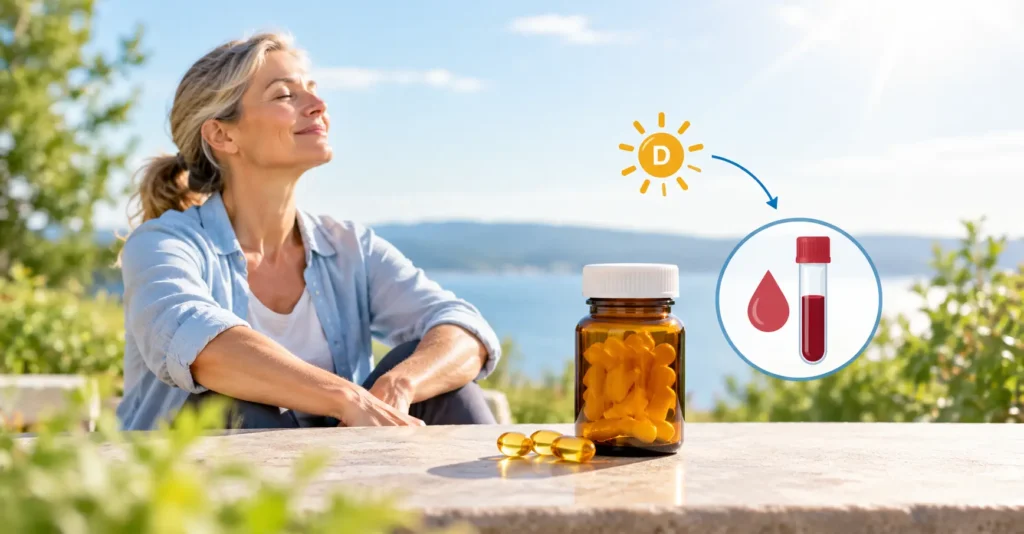
Vitamin D is one of the most widely used supplements among older adults, and it has one of the clearer roles. It helps the body absorb calcium and supports bone health. People who are deficient, including those who get little sun exposure or who have limited dietary intake, are the group most likely to benefit from correcting that shortfall.
The wider promises are less settled. The large VITAL trial, which enrolled generally healthy adults, did not show a clear reduction in major cardiovascular events or cancer with vitamin D supplementation. That does not mean vitamin D is useless. It means that taking it when your levels are already adequate is unlikely to deliver dramatic healthy aging effects.
Omega-3 Fatty Acids
Omega-3 fatty acids, mainly EPA and DHA from fish oil or algae, are among the most studied supplements in the world. They are important for normal body function, and people who eat little fish may have lower intake. For heart health, the picture is more nuanced than many headlines suggest.
In the VITAL trial, a daily 1 g fish oil supplement providing 460 mg of EPA and 380 mg of DHA did not produce a statistically significant reduction in major cardiovascular events across the whole study population. A secondary analysis suggested a possible reduction in heart attacks, and other trials have looked at specific groups. The fair reading is that omega-3s may offer modest benefits for some people, but they are not a universal fix, and the benefit is smaller than many product labels imply.
Ask about omega-3 supplements if you take blood thinners
High-dose omega-3 supplements may affect blood clotting. If you take anticoagulant or antiplatelet medication, or are preparing for surgery, ask your clinician or pharmacist whether a supplement is appropriate for you.
Creatine and Protein
Creatine is one of the few supplements with a strong, consistent connection to healthy aging. It is naturally present in muscle, and it helps supply energy for short, intense efforts. Several trials and meta-analyses in older adults have found that creatine supplementation, combined with resistance training, can increase lean mass and improve strength more than training alone.
The key phrase is “combined with resistance training.” Creatine does not replace lifting weights, walking, or other strength work. It is best seen as a support tool for people who are already training. Protein intake matters here as well. Many older adults eat less protein than they need to maintain muscle, and a protein supplement can be a convenient way to close that gap if food alone does not cover it.
Strength is one of the most practical healthy aging targets
Losing muscle strength with age is linked to falls, reduced independence, and a lower quality of life. That is why researchers focus on muscle as a measurable and meaningful outcome, and why creatine is studied in that context rather than as a general anti-aging compound.
Magnesium
Magnesium is involved in hundreds of enzyme reactions, including those that handle energy, muscle function, and nerve signaling. Many adults do not get the recommended amount from their diet, and older adults can be at higher risk of low intake. Correcting a true shortfall is the most defensible reason to take magnesium.
Beyond that, the evidence for magnesium as a broad healthy aging supplement is limited. Some observational studies link higher magnesium intake with better outcomes, but observational studies cannot show cause and effect, and trials of supplements have not consistently confirmed large benefits. Too much from supplements can cause digestive upset, so it is worth checking the amount you already get from food and other products.
Multivitamins
Taking a multivitamin daily is common, and it can be a reasonable way to cover small gaps for someone with a limited diet. It is not, however, a shortcut to healthy aging. The Physicians’ Health Study II, a long-running trial in male physicians, found that multivitamin use was associated with a modest reduction in cancer but not a clear reduction in cardiovascular disease.
A multivitamin also rarely substitutes for a varied diet. Foods contain fiber, healthy fats, and compounds that supplements cannot fully copy. If you take one, choose a product that does not stack high doses of the same nutrient across several separate supplements.
Antioxidants and the High-Dose Problem
Antioxidants have a natural appeal because oxidative stress is often discussed as a driver of aging. Yet the human evidence has been disappointing when antioxidants are taken as high-dose pills. A Cochrane systematic review of antioxidant supplements in healthy people and people with various diseases found no overall benefit for mortality, and some analyses linked beta-carotene, vitamin A, and vitamin E to higher mortality at the doses studied.
Food-based antioxidants, such as those in fruits, vegetables, tea, and legumes, are part of a diet pattern that is consistently linked with better health. That association does not automatically transfer to a concentrated pill, and this is one of the clearest examples of why whole-diet evidence and single-ingredient supplement claims should be kept apart.
Higher is not safer for many vitamins and minerals
Vitamins A and E, iron, and some other nutrients can be harmful in excess, and people who smoke should avoid beta-carotene supplements. Check the upper intake levels and tell your clinician about every supplement you take.
NAD+ Precursors: NR and NMN
NAD+ is central to cellular energy metabolism, and its levels appear to change with age, which is why NAD+ precursors such as nicotinamide riboside (NR) and nicotinamide mononucleotide (NMN) attract so much interest. In human studies, NR has been shown to raise NAD+-related blood markers, and research on NMN has been growing.
The next step is the difficult one. Changing a blood marker is not the same as showing that people live longer, stay stronger, or avoid disease. The human research on these compounds is still relatively small and often short in duration, so the strongest claims deserve caution. If you want a deeper look at how these compounds differ, our comparison article walks through the evidence side by side.
Other Popular Ingredients
Many other ingredients show up in healthy aging formulas. The research on each one varies widely, and it helps to separate what has been tested in people from what has only been studied in the lab.
- Coenzyme Q10 is involved in mitochondrial energy production. Human trials are mixed, and it is best considered for specific medical reasons rather than general aging.
- Polyphenols such as resveratrol have attracted attention from animal research. Human trials are typically small, and the results do not yet support strong claims about aging.
- Probiotics can be useful for specific digestive issues, but the evidence for broad healthy aging benefits is inconsistent and depends heavily on the strain and the condition.
Healthy Aging Supplements: Quick Comparison
| Supplement | Why people take it | Evidence picture | Main caution |
|---|---|---|---|
| Vitamin D | Bone health and correcting low levels | Clear benefit when deficient; less clear when levels are already adequate | Use supplements for a clear need; avoid very high doses |
| Omega-3 (EPA and DHA) | Heart and general fatty acid intake | Modest or uncertain benefit in large trials | Discuss high-dose use if you take blood thinners |
| Creatine | Muscle strength and lean mass | Good support in older adults, especially with resistance training | Ask a clinician first if you have kidney disease or take medicines that affect kidney function |
| Magnesium | Correcting low intake | Useful for deficiency; broader aging evidence is limited | Digestive upset at high doses; kidney disease needs care |
| Multivitamin | Covering small dietary gaps | Modest effects in some trials; not a shortcut to healthy aging | Overlapping doses with other supplements |
| High-dose antioxidants | Protection against oxidative stress | No overall benefit in reviews; some signals of harm | Beta-carotene is a concern for people who smoke |
| NR and NMN | Supporting NAD+ levels | Biomarker evidence in humans; outcome data still limited | Strong claims go beyond current research |
A Practical Checklist Before You Buy
Final Verdict
If you want the shortest honest answer, the healthy aging supplements with the best support are the ones that fix a real shortfall or target a clear outcome. Vitamin D for people who are deficient, and creatine for muscle strength alongside training, are the two that stand out most. Omega-3 and magnesium can be reasonable for some people, but their benefits are more modest than marketing suggests.
High-dose antioxidants and most “all-in-one” longevity formulas deserve skepticism. NAD+ precursors are a promising research area, but they are still better described as a work in progress than a proven route to a longer or healthier life. The strongest plan for healthy aging still starts with movement, strength training, nutrition, sleep, and regular checkups.
Frequently Asked Questions
There is no single winner for everyone. Vitamin D has clear benefits when levels are low, and creatine has good evidence for muscle strength in older adults who also do resistance training.
Current human evidence does not show that any supplement reliably slows the aging process itself. Some can support specific outcomes, such as bone or muscle health, but broad anti-aging claims go well beyond the research.
A multivitamin may help cover small gaps, especially if your diet is limited. It is not a substitute for a varied diet, and large trials have not shown a strong effect on heart disease. Discuss it with your clinician, particularly if you take other supplements.
Creatine is well studied in healthy adults, and research in older adults has generally found it to be well tolerated. People with kidney disease or those taking medications that affect the kidneys should check with a clinician first.
In many cases, yes. A diet rich in vegetables, fruit, legumes, whole grains, fish, and lean protein covers most of what healthy aging depends on. Supplements make the most sense when food alone does not meet your needs.
📚 Related Articles
Explore more evidence-based guides, supplement reviews, and practical wellness articles to better understand ingredients, benefits, limitations, and how different products compare.
- ➡️ NR vs NMN vs NAD+: Key Differences, Benefits, and What Research Shows
- ➡️ What Is NAD+? Benefits, Functions & What the Science Says
- ➡️ Genuine Purity Longevity+ Review
- ➡️ Genuine Purity NMN Trial Review
- ➡️ Healthy Aging Supplements Explained
- ➡️ What Is Berberine? Benefits, Uses, Side Effects & How It Works
- ➡️ Healthy Weight Benefits: Physical & Mental Health Impact
- ➡️ Berberine Benefits for Blood Sugar and Metabolic Health
- ➡️ Hydration Benefits: Health Tips for Daily Water Intake
- ➡️ How to Support Healthy Blood Sugar Levels Naturally
- ➡️ The Importance of Quality Sleep for a Healthier Life
- ➡️ The Benefits of Magnesium for Sleep and Stress
- ➡️ Revive Daily Review
- ➡️ Java Burn Review: Ingredients, Benefits, Pros & Cons
Scientific References and Trusted Resources
These sources cover the main supplements discussed above. Where a source is a review or trial, its findings are summarized here rather than quoted in full.
Clinical Studies, Reviews, and Research
- Manson JE, et al. Vitamin D Supplements and Prevention of Cancer and Cardiovascular Disease (VITAL). New England Journal of Medicine. 2019.
- Manson JE, et al. Marine n-3 Fatty Acids and Prevention of Cardiovascular Disease and Cancer (VITAL). New England Journal of Medicine. 2019.
- Kreider RB, et al. International Society of Sports Nutrition position stand: safety and efficacy of creatine supplementation in exercise, sport, and medicine. Journal of the International Society of Sports Nutrition. 2017;14:18.
- Deutz NEP, et al. Protein intake and exercise for optimal muscle function with aging: recommendations from the ESPEN Expert Group. Clinical Nutrition. 2014;33(6):929-936.
- Bjelakovic G, et al. Antioxidant supplements for prevention of mortality in healthy participants and patients with various diseases. Cochrane Database of Systematic Reviews. 2012.
- Sesso HD, et al. Multivitamins in the prevention of cancer and cardiovascular disease in men: the Physicians’ Health Study II randomized controlled trial. JAMA. 2012.
- Covarrubias AJ, Perrone R, Grozio A, Verdin E. NAD+ metabolism and its roles in cellular processes during ageing. Nature Reviews Molecular Cell Biology. 2021.
- Martens CR, et al. Chronic nicotinamide riboside supplementation is well-tolerated and elevates NAD+ in healthy middle-aged and older adults. Nature Communications. 2018.