Author: VitaWeller Health & Wellness Editorial Team
Evidence Reviewed: Peer-reviewed studies, systematic reviews, and guidance from recognized health organizations (NIH, NCCIH, ADA, Mayo Clinic).
Editorial Standards: Evidence-based • Independently researched • Fact-checked before publication
Introduction
Hydration is one of those topics that sounds simple until you try to apply the advice in real life. One article tells you to count glasses. Another makes it sound as if everyone needs an electrolyte drink. In practice, fluid needs change with weather, activity, illness, diet, age, and even the medications you take.
Most people do not think much about hydration until the day feels a little harder than it should. A walk feels more draining, a workout gets uncomfortable sooner, or a headache shows up midway through the afternoon. That is part of what makes hydration easy to overlook. It usually stays in the background until you fall a little behind.
In practice, most people are really asking four separate questions: how much water should I drink each day, what are the signs of dehydration, what drinks count toward hydration, and when do electrolytes actually help. Those are not exactly the same question, so it helps to answer them one by one.
The biology itself is not especially mysterious. Water helps regulate temperature, move nutrients, support digestion, protect tissues, and clear waste. When intake slips, the first signs are usually ordinary ones: lower energy, darker urine, a dull headache, dry mouth, or that slightly foggy feeling people often blame on a busy day. That is why the most useful approach is usually the least dramatic one. Start with plain water, pay attention to the situations that increase fluid loss, and use extra support only when there is a real reason for it. That is the frame for the rest of this guide.
Evidence Review
Evidence Level: ★★★★☆ Strong physiology and solid public-health guidance, with a more cautious case for product-level claims
- 💧 The basic case for hydration is not speculative. Water is part of temperature control, circulation, waste removal, and normal tissue function.
- 📚 NIH and CDC guidance is consistent on the common consequences of inadequate fluid intake, including headaches, dry mouth, darker urine, overheating, constipation, and feeling less sharp physically or mentally.
- ⚖️ There is no single daily target that works for everyone. Fluid needs shift with climate, activity, pregnancy, illness, sweating, body size, and some medical conditions or medications.
- 🧂 Plain water is still the default for most people, but longer workouts, heavy sweating, and heat exposure make electrolyte support more relevant.
- ⚠️ Product claims deserve a more careful reading. Better hydration is a reasonable goal; dramatic promises about energy, concentration, or recovery often stretch further than the label or supporting evidence really can.
Based on public-health guidance from NIH and CDC, plus reference material on dehydration, fluid balance, and daily water intake from MedlinePlus, the Institute of Medicine, and peer-reviewed literature on hydration-related health risk.
Quick Answer
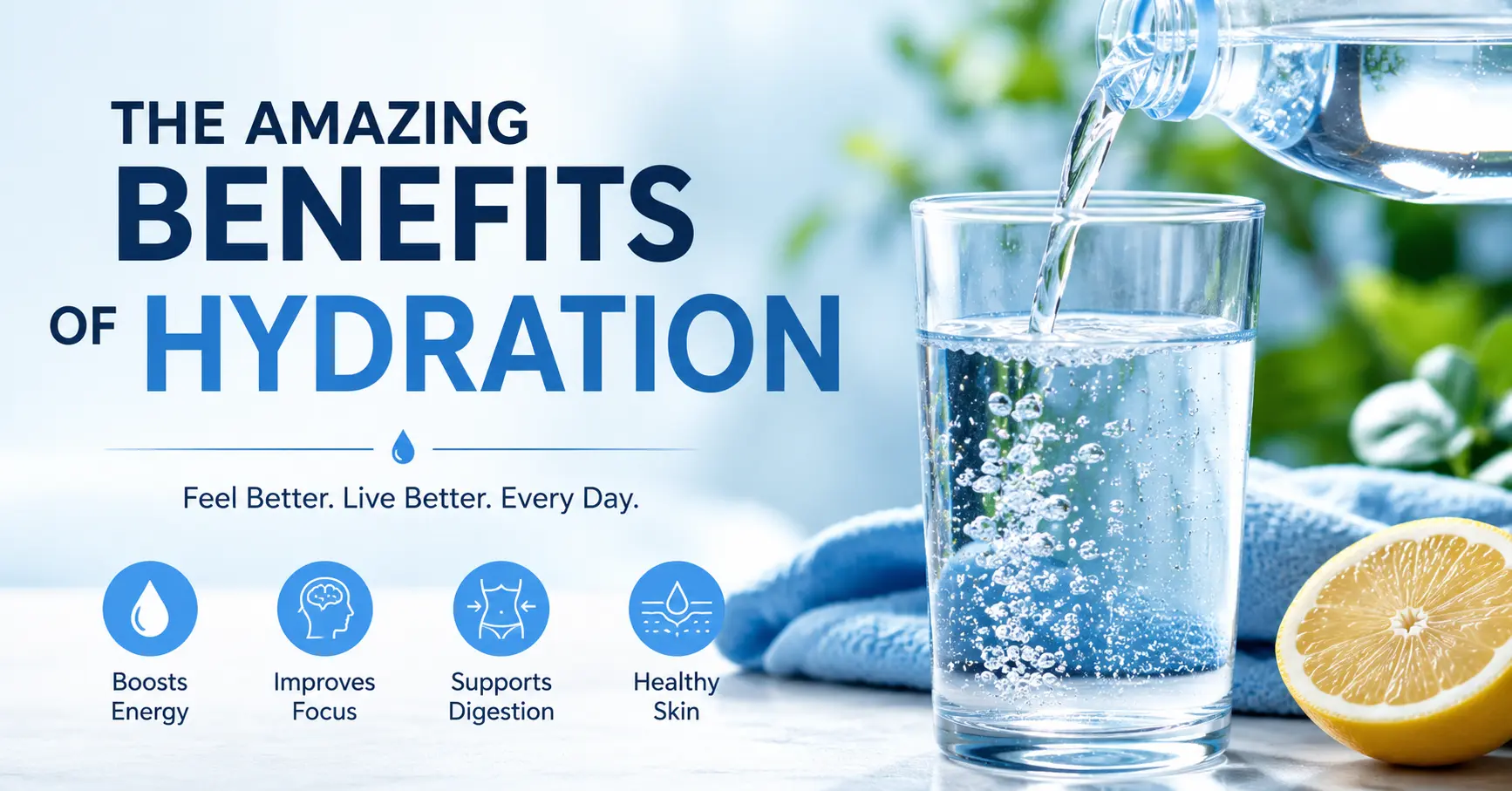
Staying hydrated helps support temperature control, circulation, digestion, normal physical performance, and day-to-day mental clarity. If you are not drinking enough, the first signs are often simple ones such as thirst, darker urine, fatigue, headaches, dry mouth, or feeling a little less sharp than usual.
If you want the short version, most adults do well when they drink fluids regularly across the day, use thirst and urine color as basic signals, choose plain water as the default, and increase intake when heat, exercise, or illness raises fluid loss. Electrolytes can help in heavier-sweat situations, but they are usually not necessary for ordinary daily hydration.
How much water is enough for most adults?
A reasonable baseline is about 9 cups of fluids per day for women and 13 cups for men, but that is only a starting point. Heat, exercise, illness, pregnancy, breastfeeding, and body size can all push fluid needs higher.
- Use those numbers as a guide, not a rigid rule.
- Remember that beverages and water-rich foods both count.
- Adjust upward when sweat loss or illness increases.
Table of Contents
- Why Hydration Matters
- Signs of Dehydration: How It Usually Shows Up
- How Much Water Should You Drink Each Day?
- When Your Fluid Needs Go Up
- Best Drinks for Hydration and What Counts
- When Electrolytes May Help for Hydration
- Practical Habits That Make Hydration Easier
- Frequently Asked Questions
- Scientific References
Why Hydration Matters
A lot of hydration advice begins with math and ends there. That is not useless, but it misses the more important point: water is part of basic day-to-day function. It helps regulate body temperature, supports circulation, shows up in saliva and joint fluid, and helps the body move nutrients and clear waste.
That is why dehydration can affect both body and mind faster than people expect. CDC guidance highlights that inadequate water intake may contribute to unclear thinking, mood changes, overheating, constipation, and kidney stones. NIH consumer guidance adds the more familiar early signs, such as thirst, headache, dry mouth, dry skin, and darker urine. If low energy is a recurring issue alongside diet and daily routines, our guide on how to support healthy blood sugar levels naturally covers other practical habits that can affect how steady you feel through the day.
That does not mean every afternoon slump is caused by dehydration. It does mean hydration is one of the simplest variables worth checking before you assume the explanation must be more complicated.
Signs of Dehydration: How It Usually Shows Up
The most common signs of dehydration are usually thirst, darker urine, dry mouth, headaches, feeling unusually tired, and noticing that concentration is not quite where it should be. Mild dehydration is easy to shrug off because each symptom can seem ordinary on its own.
The pattern matters more than any single sign. If several of these show up together, especially during hot weather, illness, or exercise, low fluid intake becomes a much more reasonable explanation. That matches the way MedlinePlus describes dehydration, where common early signs can progress into something more serious if fluid losses keep building.
How it may affect the day
- Lower energy during normal tasks
- Reduced concentration or mental sharpness
- Feeling hotter during activity
- Less comfortable exercise or recovery
Severe dehydration is different
NIH guidance advises prompt medical attention if dehydration becomes severe enough to cause confusion, fainting, rapid heartbeat, rapid breathing, or inability to urinate. At that point, simply sipping water may not be enough.
How Much Water Should You Drink Each Day?
For most adults, a useful baseline is around 9 cups of fluids per day for women and 13 cups for men, based on NIH consumer guidance. That said, there is no single daily water intake target that fits everybody, and those numbers work better as starting points than as rules you need to force every day.
CDC also emphasizes that total fluid intake can come from beverages and food. In other words, plain water counts, but water-rich foods like cucumbers, oranges, melons, strawberries, soups, and yogurt do too. So if your meals contain more fluid-rich foods, your drinking pattern does not have to carry the entire burden alone. CDC guidance on water and healthier drinks is useful here because it treats total intake more broadly than just plain water.
| Question | Useful baseline answer | What changes it |
|---|---|---|
| How much should most adults drink? | Often around 9 cups daily for women and 13 for men on average. | Heat, activity, illness, pregnancy, breastfeeding, and body size can raise needs. |
| Does only plain water count? | No. Other beverages and high-water foods contribute to total intake. | Calorie-heavy or sugary drinks may add intake, but they are usually not the best main strategy. |
| Is thirst enough to guide you? | It is a useful signal, but not always perfect in heat, illness, or during long activity. | Older adults, athletes, and busy workers may do better with intentional habits instead of waiting too long. |
When Your Fluid Needs Go Up
This part is not controversial. If you are sweating more or losing more fluid, you need to replace more fluid. That includes hot climates, hard exercise, fever, vomiting, and diarrhea. Some medical conditions, including diabetes and chronic kidney disease, and some medications can change the picture too.
This matters because hydration habits that feel adequate during a cool desk-work day may fall short during a humid afternoon walk, a stomach bug, or an intense training session. A fixed routine is better than none, but a flexible routine is usually better than a fixed one. That is the practical difference between daily water intake advice and real hydration needs in context.
Best Drinks for Hydration and What Counts
The best drinks for hydration are usually the least complicated ones. Plain water remains the simplest default because it hydrates effectively without adding calories or sugar. CDC also lists plain coffee, unsweetened tea, sparkling water, and flavored waters as reasonable low- or no-calorie options for many adults. Milk, fortified milk alternatives, and limited amounts of 100% juice can add nutrients, but they are not necessary to make hydration “count.”
The less helpful pattern is leaning on sugary drinks for most fluid intake. Soda, sweetened coffees, many fruit drinks, and some sports beverages can add calories quickly without offering much beyond fluid and taste. For most people, better hydration starts with simpler beverage choices rather than more complicated ones. That same shift often supports broader metabolic goals too, which is one reason our article on healthy weight benefits overlaps with this topic more than it may seem at first.
When Electrolytes May Help for Hydration
Electrolytes may help for hydration when fluid losses are heavier than usual, not simply because a label makes the product sound more advanced than water. The strongest use cases are longer training sessions, high sweat losses, repeated exercise in the heat, or times when water alone is not helping you feel fully recovered afterward.
That does not mean every workout needs a hydration powder. It means the product category makes more sense when the goal is replacing more than fluid alone, especially if sodium and overall sweat loss are part of the picture. Put differently, electrolytes for dehydration are situational tools, not an everyday requirement for most healthy adults. If you want to see how that plays out in a broader medical context, MedlinePlus explains fluid and electrolyte balance in a way that helps separate real replacement needs from marketing language. If you want to see how that plays out in a specific formula, the NBPure Hydration+ review is the most relevant companion piece on the site.
Fatigue and Low Energy
When the body lacks water, energy levels may decrease significantly.
Dry Skin and Lips
Hydration plays a major role in maintaining healthy skin.
Headaches
Dehydration is a common trigger for headaches and migraines.
Difficulty Concentrating
The brain relies heavily on proper hydration for optimal performance.
Muscle Cramps
Electrolyte imbalance caused by dehydration may contribute to muscle discomfort and cramps.
How Much Water Should You Drink?
Although hydration needs vary from person to person, many health experts recommend:
- Around 2 liters (8 glasses) of water daily for women
- Around 2.5–3 liters daily for men
Factors such as exercise, climate, diet, and activity level can increase daily water requirements.
Simple Tips to Stay Hydrated
Maintaining healthy hydration habits does not have to be complicated. Here are a few simple ways to drink more water consistently:
- Carry a reusable water bottle
- Drink water before meals
- Add lemon or fruit for natural flavor
- Eat water-rich foods like cucumber, watermelon, and oranges
- Set hydration reminders on your phone
A Helpful Hydration Solution
For people with busy schedules, hydration support products can make it easier to maintain proper fluid and electrolyte balance throughout the day. Many hydration supplements are designed to support energy, recovery, and daily wellness.
You can explore one popular hydration support product here:
When combined with healthy daily habits, hydration support products may help improve overall well-being and maintain optimal performance.
Final Thoughts
Proper hydration is one of the simplest yet most powerful ways to support long-term health. Drinking enough water each day can improve energy, concentration, physical performance, and overall wellness.
By building consistent hydration habits and using supportive wellness products when needed, you can help your body function at its best every day.
📚 Related Articles
Continue exploring our evidence-based guides on berberine supplements, blood sugar support, and metabolic health.
- ➡️ Healthy Weight Benefits: Physical & Mental Health Impact
- ➡️ The Benefits of Magnesium for Sleep and Stress
- ➡️ The Importance of Quality Sleep for a Healthier Life
- ➡️ How to Support Healthy Blood Sugar Levels Naturally
- ➡️ Revive Daily Review
- ➡️ Sleep Lean Review – Sleep Better & Support Healthy Overnight Metabolism
- ➡️ Best Berberine Supplements for Blood Sugar Support
Scientific References
📚 PubMed – Hydration and Human Performance Research
Why it was used: PubMed provides access to peer-reviewed clinical studies from the National Library of Medicine demonstrating hydration’s effects on cognitive function, physical performance, and metabolic health. Multiple studies show that adequate water intake significantly impacts energy levels, concentration, temperature regulation, and overall wellness outcomes.
🏥 National Institutes of Health (NIH) – Hydration for Optimal Health
Why it was used: The NIH provides evidence-based scientific information on water’s essential role in human physiology. Their research and guidelines cover hydration’s impact on organ function, nutrient transport, temperature regulation, joint lubrication, toxin removal, and disease prevention. NIH data establishes the physiological importance of proper daily water intake.
🔬 CDC – Centers for Disease Control & Prevention: Water and Healthy Drinks
Why it was used: The CDC provides authoritative public health guidance on hydration, water intake recommendations, and the relationship between proper hydration and disease prevention. CDC resources document hydration’s role in supporting healthy weight management, metabolic function, and chronic disease prevention at the population level.
📖 Google Scholar – Hydration, Wellness & Aging Research
Why it was used: Google Scholar aggregates peer-reviewed academic literature on hydration’s effects on cognitive performance, physical endurance, aging, disease prevention, and overall health outcomes. This resource provides access to hundreds of published studies evaluating proper hydration’s role across diverse populations and health conditions.
📢 Affiliate Disclosure
Some links on VitaWeller are affiliate links. If you purchase a product through these links, we may earn a small commission at no additional cost to you. This helps support our website and allows us to continue creating evidence-based health content. Our recommendations are based on independent research, product evaluation, and editorial standards—not on affiliate partnerships.